 Cloud & Business Apps
 Cybersecurity
 Data & AI
 IoT & Connectivity
 Industry
 Health
 Banking and Finance
 Public Sector
 Retail
 Tourism and Leisure
 Transport & Logistics
 Energy & Utilities
 Smart Cities

Anshul Kudal
Anshul is Product Manager in the Data Innovation team at Telefonica I + D. He currently leads the development of Marketing and Business Development for Data Innovation. He has been working with Telefonica for 5 years, developing and commercializing Big Data and Artificial Intelligence products. In the past he has worked in banking and E-commerce industries.

How do you capture clients on multiple channels?
Have you heard of the word omnichannel? It is a word which is used a lot in the world of marketing. Like its name indicates, it refers to multiple sales channels available to the consumer, which can include physical shops, pop-ups, the web and apps. Omnichannel, which originally focused on the physical world, has expanded into the digital world. The digital strategy has become the most important part for the majority of businesses, but experts in marketing however don’t know how to connect the online and the offline world. Clients use different channels when they want to buy a product. The first time that they come into contact with a product is possibly on social media or on television. Once the product has caught the attention of the public, they can find it online to look at prices or models; then, the potential customer goes to a physical store to test the product (especially with fashion and electronics) and finally they decide whether to buy it, either in the physical store or afterwards online. The numerous points of contact between the product and the potential clients are what hinders the work of marketing professionals in understanding and interpreting the needs of the public. It is complicated to establish percentages about which clients prefer the online service and which clients opt for a more traditional method in-store. One of the marketing objectives is to capture the attention of the consumer in order to offer them the products which most relate to their needs. The multiple channels make it difficult to make a personalised experience for the clients. On the online platform it is relatively straightforward to offer a personalised environment which selects the products most appropriate for each consumer, however with the offline medium, the customer may feel lost if they do not find the product they desire in the expected section of the physical store. For example, a consumer can assess products differently online and can go to a local shop to try them out, once they arrive at that shop that can become drawn other products with better offers or it could be that the shop says the product which they are interested in online is not available. These factors mean that in the transition from online to offline, potential clients are lost, without knowing for sure what has led the consumer to change their decision. It causes a loss of fundamental data. How do you resolve this loss of data? One solution could be to encapsulate all of the business data in a large database which will compare and analyse it, something which would take a lot of effort, with capturing information about offline shopping patterns already being quite tedious. Audience and Attribution allows business and marketing professionals to find buying and interest patterns and to create profiles of the visitors of an online business based on data processed by Telefónica. Also, it identifies the interests of the users which go to a physical store, including the users who are near physical advertisements, such as billboard. Audience and Attribution thus allows the gathering of information about online and offline consumers and also values the profitability of advertising investments, as it can register users that have bought a product due to a physical advert, or that have visited a store, whether it be online or offline. In order not to lose information when consumers move to offline platforms, you can also use LUCA Store which provides information about the potential of an area of influence, zones of interest and visitors at a point of sale. Finally, business and marketing professionals will be able to have a 360º view of their business!
June 28, 2019
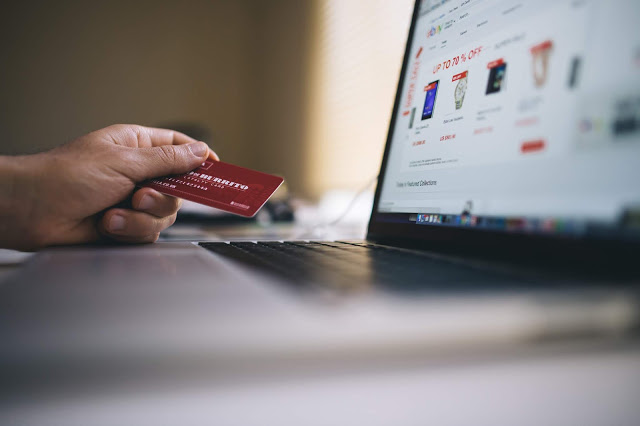
How to win over the Millennial Shopper? A great personalised experience will make them stay
Data is essential in creating a personalised experience which attract Millennial clients. The obtaining and exchanging of information, always maintaining the privacy of the client, which is key in continuing to capture and retain their attention. Millennials, the first digital generation We know that according to historical and economic context, human beings tend to develop similar attitudes and concerns. More than 8 million people in Spain belong to the Millennial generation. Many companies directing all of their forces into connecting with them and understanding their characteristics is essential to achieving this. Millennials are demanding, digital and reserved, but however they are lazy and impatient. They live in a digital world offering a wide a diverse product range and they are accustomed to immediate communication, purchases and access to information. And it is not okay merely to capture the attention of a Millennial, you must maintain it. In recent years. Marketing professionals have realised that the retention of clients is actually more important than acquiring them. As a matter of fact, a recent E-commerce 2018 survey about Spain shows that the conversion rate of existing clients is three times that of new clients. When it comes to retaining clients, creating a personalised user experience is key, already 77% of Millennial clients consider that personalised recommendations are extremely useful and 33% end up buying recommended products. There is nothing like knowing the client and offering them what you know will interest them. Millennial clients of Generation Z have a very short attention span. It is less likely that these users will stay on a web page for more than a few seconds in order to find what they are looking for or a website that doesn’t suit their needs for that matter. Also, in a digital world characterised by a wide range of products offered, these types of clients have at their fingertips countless tools and possibilities to choose what they want, when they want. So, how do we retain these types of clients? According to experts in this sector, the key is in anticipating their searches and wants, and to show them the products in as little time as possible. Creating a great personalised user experience. Understanding the client and anticipating their needs: The key to all of this, is information. Digital clients generate data online and on other platforms which, while always preserving their privacy, can be used commercially. With sufficient data it is possible to differentiate between the curiosity of the client and the intention of the client, meaning, actually knowing if a client is interested in a product. How do you get this information? There are different sources of data available: Data which the user generates online on their own web page, application or platform. This could be data from sources such as subscriptions or product searches and purchases. Third party data which accumulate on applications and web pages of third parties in the form of cookies and email lists. This information is sold to businesses and generally is of quite poor quality and not overtly legal. Third party data, other providers and companies which are willing to share or sell it. This is of better quality and legal. Always taking into account that the privacy of the client should not be violated, the latest model which brings together all of the best aspects, is something in which all salespeople should invest. To this day, giants such as Oracle, Salesforce and Adobe are investing in markets and platforms to support this exchange of data between businesses. At Telefónica, one of the biggest telecommunications businesses in the world, a team of data scientists have developed a state of the art solution based on artificial intelligence which can drive marketers’ needs using an abundance of company data. Thanks to this, a business-person canknow the needs, and the context of their clientele and anticipate when the next purchase will occur. These solutions are totally compatible with GDPR and they ensure the privacy of their users. Telefónica, which has access to information and data for a large number of clients, is already associated with being one of the main companies helping them understand their clients. They hope that, with their advanced artificial intelligence, their data and focus centred on defending privacy, they can support companies to create a much more satisfactory digital ecosystem for their clients. You can also follow us on Twitter, YouTube and LinkedIn
March 19, 2019