 Cloud & Business Apps
 Cybersecurity
 Data & AI
 IoT & Connectivity
 Industry
 Health
 Banking and Finance
 Public Sector
 Retail
 Tourism and Leisure
 Transport & Logistics
 Energy & Utilities
 Smart Cities

#WomenInTech: Paz Delgado and the value of bringing ESG and Artificial Intelligence together
What do you do and what path led you there?
I currently lead the ESG area at Telefónica Tech, where I coordinate the strategy across its three dimensions: environmental, social and inclusion, as well as good governance.
I also work to integrate the AI strategy defined by the Telefónica Group across all business areas and operations, providing the tools needed to ensure regulatory compliance.
My journey to this point has been quite cross-functional: I have worked in roles related to finance, commercial planning for technology businesses, strategy and transformation, which has given me a strong understanding of how to connect innovation with sustainable impact.
Connecting innovation with sustainable impact means integrating ESG and AI into the heart of the business.
What is the main challenge facing an ESG professional in a technology company such as Telefónica Tech?
The unprecedented demand for digital communications has forced infrastructure to consume more energy than ever before, while at the same time we now have access to increasingly renewable and efficient energy sources.
We need to balance the pace of innovation with responsibility: developing cutting-edge solutions without losing sight of their social and environmental impact. It is also essential to align different business areas, because ESG is not a standalone issue but something that cuts across the entire organisation.
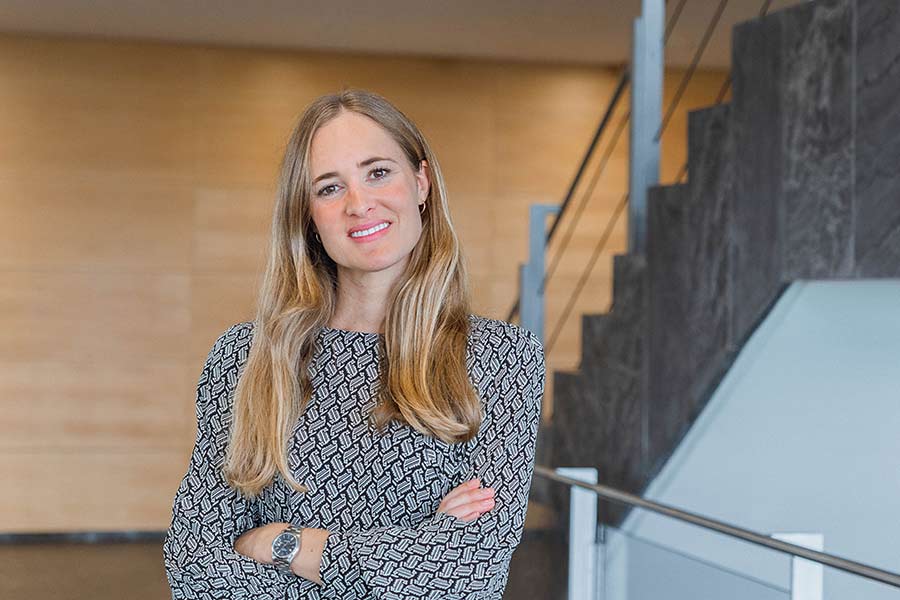
Innovating faster also means innovating more responsibly.
What aspects are key for a company to become a benchmark in ESG?
First of all, companies need to integrate ESG principles into their business strategy rather than treating them as an add-on. To achieve this, it is vital to measure and report indicators rigorously.
It is also essential to invest in sustainable innovation by developing solutions that generate a positive impact. For example, at Telefónica we have helped customers manage resources more efficiently through our Smart Water solutions. Likewise, the rollout of more efficient technologies such as fibre and 5G enables lower-emission communications networks.
To support this, at Telefónica we have developed solutions under the Eco Smart label that meet criteria related to energy savings, reduced water consumption and lower CO2 emissions, while also promoting the circular economy. Finally, companies need to foster a corporate culture built on ethics, diversity and transparency.
Becoming a benchmark in ESG means embedding it into the strategy and measuring its impact rigorously.
What personal skills do you think are important for succeeding in ESG within the technology sector?
Strategic vision to connect sustainability and business, together with the ability to adapt in a technological environment that evolves extremely quickly.
When deploying Artificial Intelligence solutions, what distinguishes a responsible ESG-aligned strategy from one that is not?
Artificial Intelligence solutions deliver clear operational efficiencies: they help us become more agile, make better decisions and offer services that in turn help customers operate more efficiently. However, their use also introduces new challenges around security, governance and organisational control.
To address this, at Telefónica we have a Cybersecurity strategy that allows us to manage threats in collaboration with expert partners and, at the same time, we have developed tools that help us detect risks and comply with normative both internally and at European level. The key difference lies in considering the long-term consequences.
AI only creates real value when it is deployed with a long-term vision, security and control.
How are automation and Artificial Intelligence impacting the measurement and reporting of ESG indicators?
They are driving a very significant change because they make it possible to automate data collection, improve data quality and generate real-time analysis. This leads to reporting that is more accurate, comparable and auditable. In addition, AI helps identify threat and risk patterns that were previously difficult to detect, improving decision-making and anticipation.
What does gender diversity contribute to innovation and competitiveness in the technology sector?
Gender diversity brings different perspectives, which enrich decision-making and encourage innovation. Diverse teams tend to identify user needs more effectively and reduce bias, something especially critical in technology and in areas such as Artificial Intelligence.
As one of our leaders said when this initiative first began: "diversity is not only about gender, but also about different ways of thinking". Without doubt, the sector needs diverse profiles with vision and leadership ambition in order to tackle the challenges ahead.
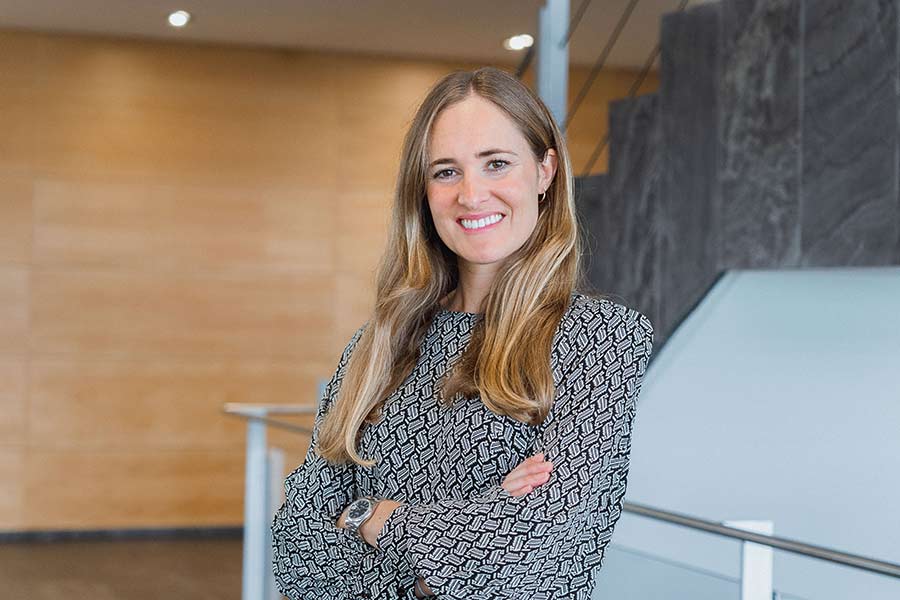
Diversity drives better decisions, greater innovation and technology with fewer biases.
What advice would you give to girls and young women who would like to pursue a career in this field?
There has never been a better time to work in technology, and their contribution is essential to making that technology more human and inclusive.
We are experiencing a technological transformation that is reshaping every productive environment, and bringing more female talent into the sector must be a strategic priority for all companies. I would therefore encourage girls and young women to train, trust in their talent and never place limits on how they imagine their professional future in this field.
True technological transformation brings together innovation, responsibility and diverse talent.