 Cloud & Business Apps
 Cybersecurity
 Data & AI
 IoT & Connectivity
 Industry
 Health
 Banking and Finance
 Public Sector
 Retail
 Tourism and Leisure
 Transport & Logistics
 Energy & Utilities
 Smart Cities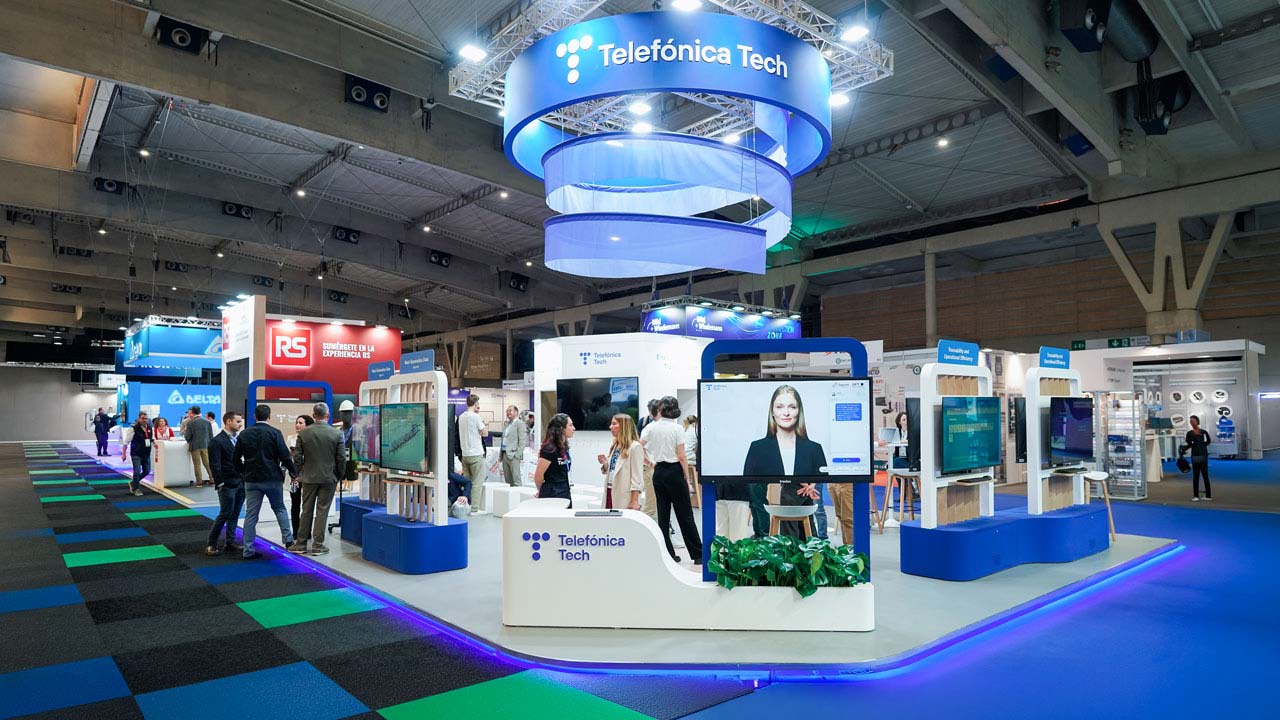

Advanced Factories 2026: a journey through the digital factory, from data to industrial intelligence
After three days at Advanced Factories 2026, held from 5 to 7 May at Fira Barcelona Gran Via, we returned with many conversations still ongoing, ideas shared and the certainty that industry is accelerating its transformation with a far more practical approach. Less talk and more real world application.
That was the approach we brought to the event. From our stand, designed as an experiential space, we showcased a complete journey through the digital factory with 17 demos organised into four areas: traceability and operational efficiency, protected industry, the next generation of data and intelligent OT solutions.
The aim was to show how different technologies coexist in industrial environments and how they can be integrated to improve operations, anticipate incidents and support decision making.
The digital factory begins with reliable data capture, secure infrastructure and the ability to turn that knowledge into useful decisions.
A digital factory explained step by step
The journey began at the source of everything: industrial data. Throughout the demos, we showed how to capture it on the factory floor, secure the flow of that data and turn it into useful information for operations, maintenance and business.
We often talk about Artificial Intelligence, automation or digital twins as though they were independent layers. However, that intelligence loses context and value without robust infrastructures, reliable connectivity and a clear data strategy.
That is why an important part of the space focused on the need to build resilient and protected industrial environments capable of connecting IT and OT without compromising security, availability or operational continuity.
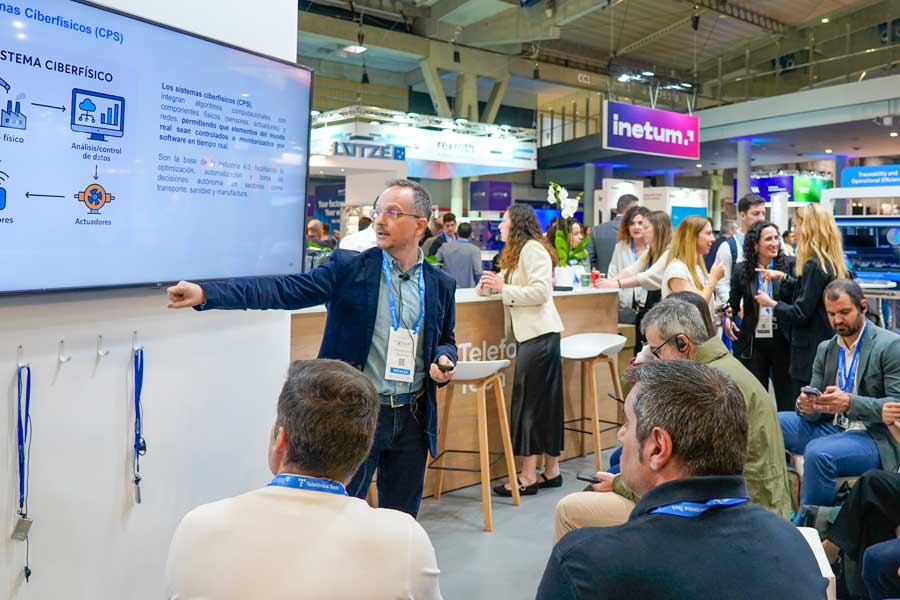
From there, the journey moved towards use cases where data delivers real value. We showcased computer vision solutions, AI powered assistants, scenario simulation and tools for more agile and predictive management of industrial operations.
From factory floor data to actionable intelligence
One of the aspects that attracted the greatest interest from visitors to our stand was precisely the ability to connect technologies that are often presented separately.
The objective was to present an integrated vision of the digital factory, beyond individual demos. From capturing information on the factory floor to using Artificial Intelligence to extract value from it; from asset monitoring to anticipating operational issues or securely sharing information across different environments and systems.
That practical approach generated many conversations around challenges that are now common across much of the industry: reducing operational complexity, improving traceability, protecting critical infrastructures and using data for far more than monitoring alone.
Industrial transformation depends on how we connect all technologies to serve people, processes and the business.
Robotics, humanoids and avatars: technology working for people
A key element of our participation was the collaborative humanoid we brought to the event, designed to simulate operator behaviour in industrial environments and explore how these kinds of solutions can reduce repetitive or hazardous tasks.
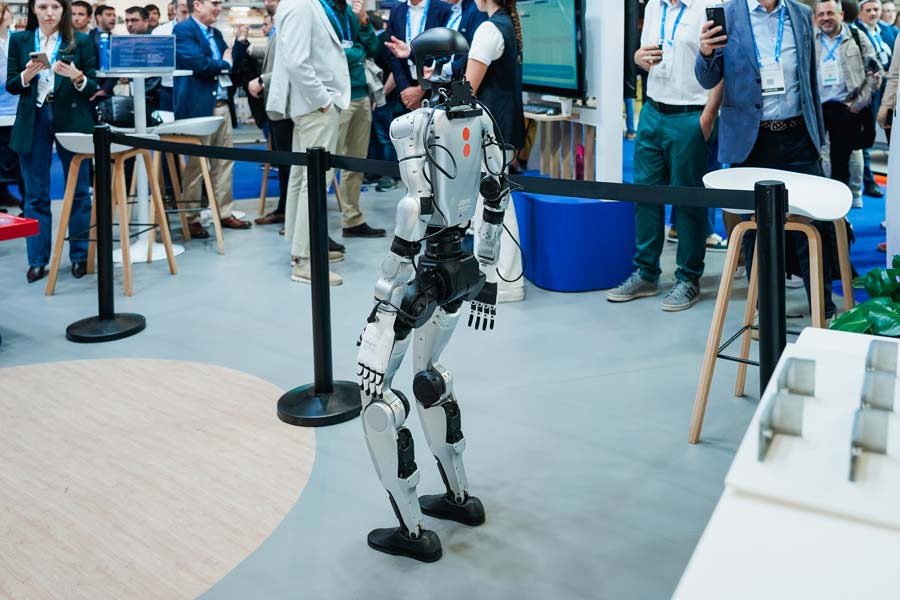
Beyond its visual impact, the real interest lay in opening up a recurring conversation within the sector: how to integrate new robotic capabilities into factory environments in a useful, safe and realistic way.
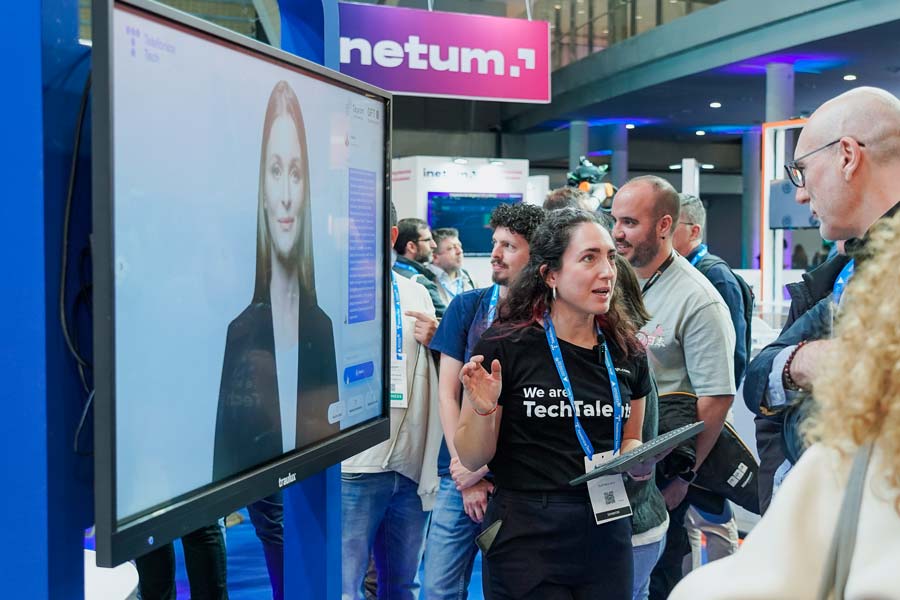
We also featured two generative AI avatars that welcomed visitors, guided them through the demos and helped them organise their route around the stand. In such a busy, information rich environment, they also became a natural way of demonstrating how conversational interfaces can be integrated into industrial scenarios.
Conversations about the future of industry
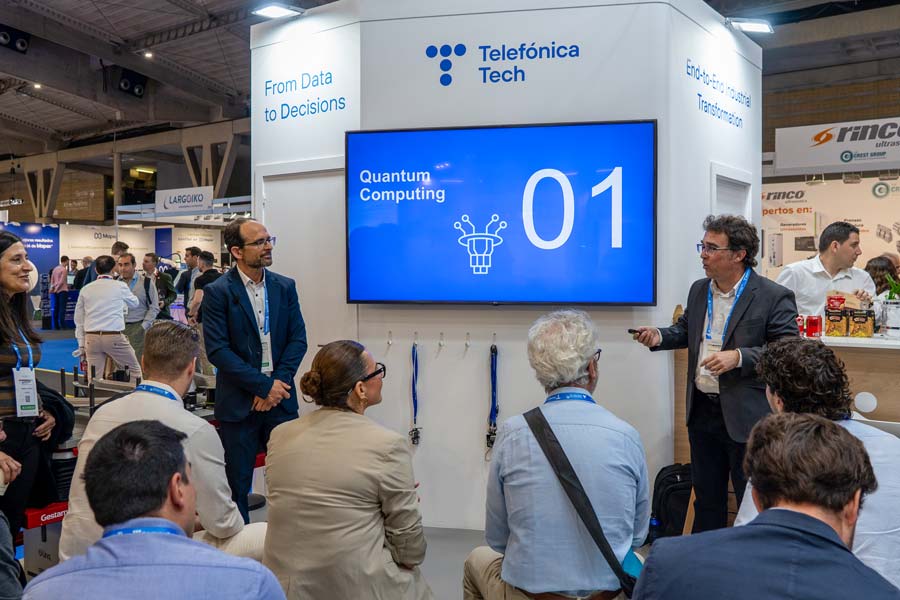
Our participation at Advanced Factories also included sessions at the Industry Congress and the Innovation Theatre, where we addressed some of the sector’s current challenges.
We discussed the next generation of connected, intelligent and collaborative industrial robotics; the technological and human challenge of digitising industrial operations; and governance, operations and monitoring strategies to strengthen Cybersecurity in OT environments.
Beyond the conference sessions, the event proved to be a valuable meeting point for sharing experiences with customers, partners and professionals from different industrial sectors. Many conversations revolved around similar concerns: integrating IT and OT, protecting critical infrastructures, reducing dependence on manual processes and turning data into a useful business tool.
■ At Advanced Factories 2026, we announced the launch of our federated platform for creating secure, interoperable and governed multisector Data Spaces. The solution enables companies from different sectors to share information with traceability, clear rules and full control over their own data, avoiding silos and enabling new collaboration models.
What we are taking away from Advanced Factories 2026
Advanced Factories made it clear that industrial transformation is no longer an isolated project or a collection of disconnected technologies. The focus is shifting towards integration, resilience, operations and adaptability.
The main challenge also lies there: integrating technologies such as Artificial Intelligence, advanced automation and collaborative robotics into complex, demanding and results driven industrial processes.
We returned from the event with one clear idea: from day one, industry needs technology that is practical, interoperable and aligned with the realities of the factory floor. That remains the focus of our work.