 Cloud & Business Apps
 Cybersecurity
 Data & AI
 IoT & Connectivity
 Industry
 Health
 Banking and Finance
 Public Sector
 Retail
 Tourism and Leisure
 Transport & Logistics
 Energy & Utilities
 Smart Cities
Marta Kaddour de Elias
Environmental Technologies Engineer, proactive, curious and results driven, with a strong commitment to advancing sustainable technology solutions through IoT.
As a Product Manager, I work at the intersection of innovation, retail and sustainability, developing initiatives that optimise processes and deliver real impact.
Passionate about challenges and change, my goal is to help transform the retail sector towards more efficient and responsible models. The potential is limitless, this is only the beginning.

Self-service digital offices: technology bringing Public Administration closer to people
Digital transformation has changed the way citizens and Public Administrations interact. However, one of the biggest challenges remains ensuring that this digitalisation is truly accessible to everyone. Moving towards a more efficient administration is not only about digitising procedures, but also about ensuring that everyone can access them easily, securely and intuitively. In this context, at Telefónica Tech we promote last-mile digital administration solutions that make it possible to bring public services closer to citizens through self-service digital offices. This is a new generation of digital service points designed to deliver an accessible, inclusive experience available 24 hours a day. Digitalisation must also be inclusive An increasing number of administrative procedures are carried out through digital channels. Certificates, fee payments, census enquiries and electronic records are already part of the day-to-day running of any modern administration. However, not all citizens have the same level of digital skills or the same resources to access these services from home. This is where self-service digital offices become particularly relevant. These solutions make it possible to bring digital administration directly to citizens, removing access barriers and reducing the digital divide, especially for older people, vulnerable groups and municipalities located far from major administrative centres. We work to ensure that technology is not an obstacle, but a tool that simplifies the relationship between citizens and Public Administration. A new way to interact with Public Administration Self-service offices allow procedures to be completed independently, easily and securely, without the need for an appointment and outside normal opening hours. Citizens can access services such as the issuance of certificates and proof of residence documents, the payment of taxes and municipal bills, enquiries regarding census information, or the submission of documentation through electronic records, all within a guided environment adapted to any user profile. The experience has been designed with usability and accessibility as priorities. Intuitive interfaces, adapted touchscreens, visual and audio assistance systems, as well as identification through electronic ID and facial recognition, make these offices a straightforward and accessible channel to use. In addition, these solutions have been designed following advanced universal accessibility and regulatory compliance criteria, aligned with Order TMA/851/2021 on accessibility in urban public spaces and other regional accessibility and non-discrimination regulations. ■ They incorporate features such as screen readers with voice synthesis, compatibility with headphones, adapted contrast for people with low vision, large-print characters, braille labels and devices positioned at accessible heights to deliver an inclusive experience for every citizen. Secure technology ready for Smart Cities The solution we have developed at Telefónica Tech integrates advanced digital administration and digital service capabilities within an architecture designed to connect different systems and applications, incorporate new services quickly and be managed remotely, all supported by advanced Cybersecurity capabilities. The platform has been designed with a flexible architecture, based on microservices and modern web technologies, enabling the rapid integration of new municipal services, management systems and existing digital administration platforms. It also incorporates secure HTTPS communications, authentication using JWT tokens and centralised operational capabilities for the remote management of terminals and services. Thanks to its integration through APIs and web services, the offices can connect with existing municipal systems and provide an experience fully integrated with the administration’s digital ecosystem. The platform incorporates different advanced citizen authentication and identification mechanisms, allowing security levels to be adapted to the needs of each Public Administration. The solution also includes multilingual support, remote monitoring capabilities and centralised management tools that allow Administrations to control, configure and evolve services efficiently from a single platform. In addition, these offices have been designed under strict accessibility, security and regulatory compliance criteria, including universal accessibility standards, European CE conformity and alignment with the data protection principles established by the GDPR. The solution integrates secure authentication, encrypted communications and measures designed to protect citizens’ privacy. Bringing Administration closer to citizens Smart Cities should not only be more connected; they should also be more human. That is why we see innovation as a tool for improving people’s lives and enabling universal access to public services. The introduction of self-service digital offices enables local councils and public bodies to move towards more modern, efficient and citizen-focused service models, where technology acts as a bridge between Administration and citizens. With this solution, we reinforce our commitment to the digitalisation of Public Administrations through technologies capable of improving the citizen experience, optimising public resources and enabling universal access to digital services. The evolution of public services depends on delivering experiences that are more agile, accessible and adapted to new social needs. Self-service digital offices represent precisely that evolution: an administration that is available, approachable and prepared to respond to the challenges of inclusive digitalisation. ■ We support Public Administrations on this journey towards smarter, more connected and people-focused management. More information ↗ AI & Data How AI enhances accessibility and breaks down language barriers January 29, 2025
May 13, 2026
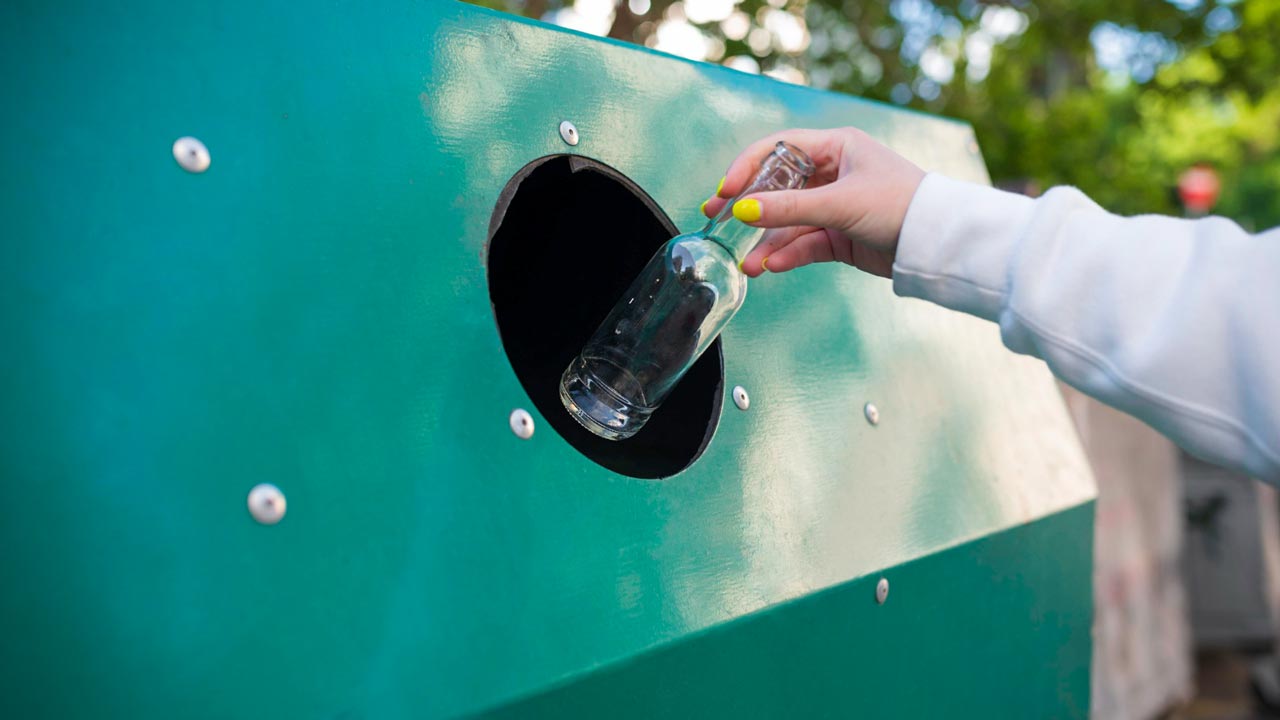
Reverse Vending: the digital infrastructure of DRS for smarter waste management
The implementation of the deposit-return system (DRS) will mark a turning point in waste management. But beyond its environmental or regulatory impact, there is a reality that often goes unnoticed: DRS is, in essence, a distributed digital infrastructure, made up of thousands of connected devices, managed in real time and capable of generating highly valuable data for public administrations, retailers and logistics operators. More than a recycling system, DRS is a distributed digital infrastructure at national scale. Reverse Vending machines (RVMs) are at the heart of this new ecosystem. Their large scale deployment represents a technological challenge that requires advanced capabilities in IoT, connectivity, analytics, Cybersecurity and remote management. This highlights the role of technology as a key enabler for making DRS efficient, secure and scalable. A global context accelerating change The adoption of deposit systems is growing worldwide. Countries such as Germany, Norway and Lithuania achieve return rates above 90%, demonstrating the direct impact of financial incentives on consumer behaviour. In Norway, for example, the system has enabled the recovery of more than 97% of PET bottles, significantly reducing packaging waste in landfills and natural environments. Deposit systems not only increase recycling rates, they transform consumer behaviour. The global Reverse Vending machine market reflects this trend and is expected to grow at an annual rate of over 10% until 2030, driven by regulation and the need to improve efficiency in waste management. For example, in Spain DRS is expected to be implemented in the coming years, with the aim of increasing collection rates for packaging, currently around 41% for plastic bottles, to meet European regulatory targets of 70% by 2025 and higher levels thereafter. Reverse Vending: much more than a recycling machine Although they may appear to be simple return points for packaging, Reverse Vending machines are in fact highly sophisticated systems combining advanced sensors, IoT connectivity and real time processing capabilities. They form the operational core of DRS and are also one of its most technologically demanding components. Each Reverse Vending machine is an intelligent node within a connected data network. Their operation begins with container identification through computer vision, barcode scanning and sensors that verify weight, shape and material. This process, completed in seconds, not only ensures the validity of the item but also activates internal sorting and compaction mechanisms that optimise storage capacity and reduce logistics costs associated with collection. But the real transformation happens when these machines are connected. Each Reverse Vending machine becomes an intelligent node within a distributed network that requires secure and stable connectivity (4G/5G, fibre or NB IoT) to transmit operational data, fill levels, incidents and usage patterns. Connecting machines is what turns recycling into an intelligent system that can be managed in real time. This information feeds remote monitoring platforms that enable thousands of devices to be managed simultaneously, anticipate failures, plan more efficient collection routes and ensure service availability at all times. In addition, these machines integrate digital screens that can be updated remotely, turning them into a dynamic communication channel. This makes it possible to display instructions, environmental awareness campaigns or even context aware promotional content, enhancing the user experience and creating new interaction opportunities for retailers and operators. All of this requires a robust approach to Cybersecurity, as we are dealing with critical infrastructure deployed in public spaces and permanently connected. Device protection, identity management, encrypted communications and continuous threat monitoring are essential to ensure a reliable and resilient system. Cybersecurity is no longer optional, it is a structural requirement in any connected infrastructure. Overall, Reverse Vending machines are no longer simple recycling devices but advanced digital infrastructure, capable of generating data, delivering services and operating as part of a national waste management ecosystem. However, operating this network of thousands of connected, distributed devices in real world environments introduces significant challenges that go far beyond the devices themselves. Operational and technological challenges of DRS The implementation of DRS is not only about changing how we return packaging, it involves building a distributed digital infrastructure that must operate in a coordinated, secure and efficient way across thousands of locations nationwide. This is where the real challenges begin. The challenge is not deploying machines, but operating a massive network of connected devices without friction. System integration Each Reverse Vending machine will need to communicate with management platforms, retailers, logistics operators and public administrations. This is not a single centralised system, but a living ecosystem where multiple stakeholders, technologies and operating models coexist. ■ Ensuring everything works seamlessly requires open architectures, well designed APIs and a shared vision of interoperability. Large scale device management DRS will involve operating thousands of machines across supermarkets, transport hubs, campuses, events and public spaces. Each one will require constant monitoring to determine whether it is full, has experienced an incident, requires maintenance or needs a software update. ■ Without a robust IoT platform capable of real time monitoring and remote management, the system would become inefficient and costly. Without a robust IoT platform, scaling DRS would be operationally unfeasible. Service availability Service availability is another critical factor. A machine that is out of service is not just a technical issue, it directly impacts citizen participation and return rates. ■ Keeping machines fully operational at all times requires stable connectivity, rapid recovery mechanisms and predictive maintenance models that anticipate failures before they occur. Cybersecurity And of course, Cybersecurity. These machines will be deployed in public spaces, permanently connected and handling sensitive information. Protecting them against unauthorised access, data manipulation or attacks is essential to maintain trust in the system. ■ This requires encryption, secure identity management, continuous monitoring and a security by design approach. Protecting the network means protecting trust in the entire system. Overall, these challenges show that DRS is not just an environmental measure or a regulatory requirement, it is a nationwide technological project. A challenge that combines connectivity, data, security and large scale operations. This is precisely where Telefónica Tech provides differential value, helping to build a connected, secure infrastructure ready to evolve alongside the system’s needs. Use cases from retail to public spaces DRS connects physical spaces with digital intelligence in real time across scenarios such as: Retail and supermarkets: Integration with loyalty programmes, incentive management and improved customer experience. Events and festivals: Connected portable machines to manage usage peaks and monitor operations in real time. Campuses and workplaces: Encouraging sustainable behaviours among employees and generating participation data. Public spaces: Connected municipal infrastructure enabling centralised monitoring and optimised collection routes. Conclusion: DRS as the digital infrastructure of the future Reverse Vending machines are not just a tool to recycle more, they are intelligent nodes within a distributed digital network, capable of transforming waste management and generating economic, environmental and social value. The future of recycling will be connected, intelligent and data driven. With the arrival of DRS, has the opportunity to build a modern, connected and efficient infrastructure. At Telefónica Tech, we are ready to support businesses, public administrations and operators in this challenge, providing technology, security and expertise to ensure the system works from day one. Connectivity & IoT A new way of recycling: Smart Containers October 2, 2024 Image: Freepik.
March 23, 2026