 Cloud & Business Apps
 Cybersecurity
 Data & AI
 IoT & Connectivity
 Industry
 Health
 Banking and Finance
 Public Sector
 Retail
 Tourism and Leisure
 Transport & Logistics
 Energy & Utilities
 Smart Cities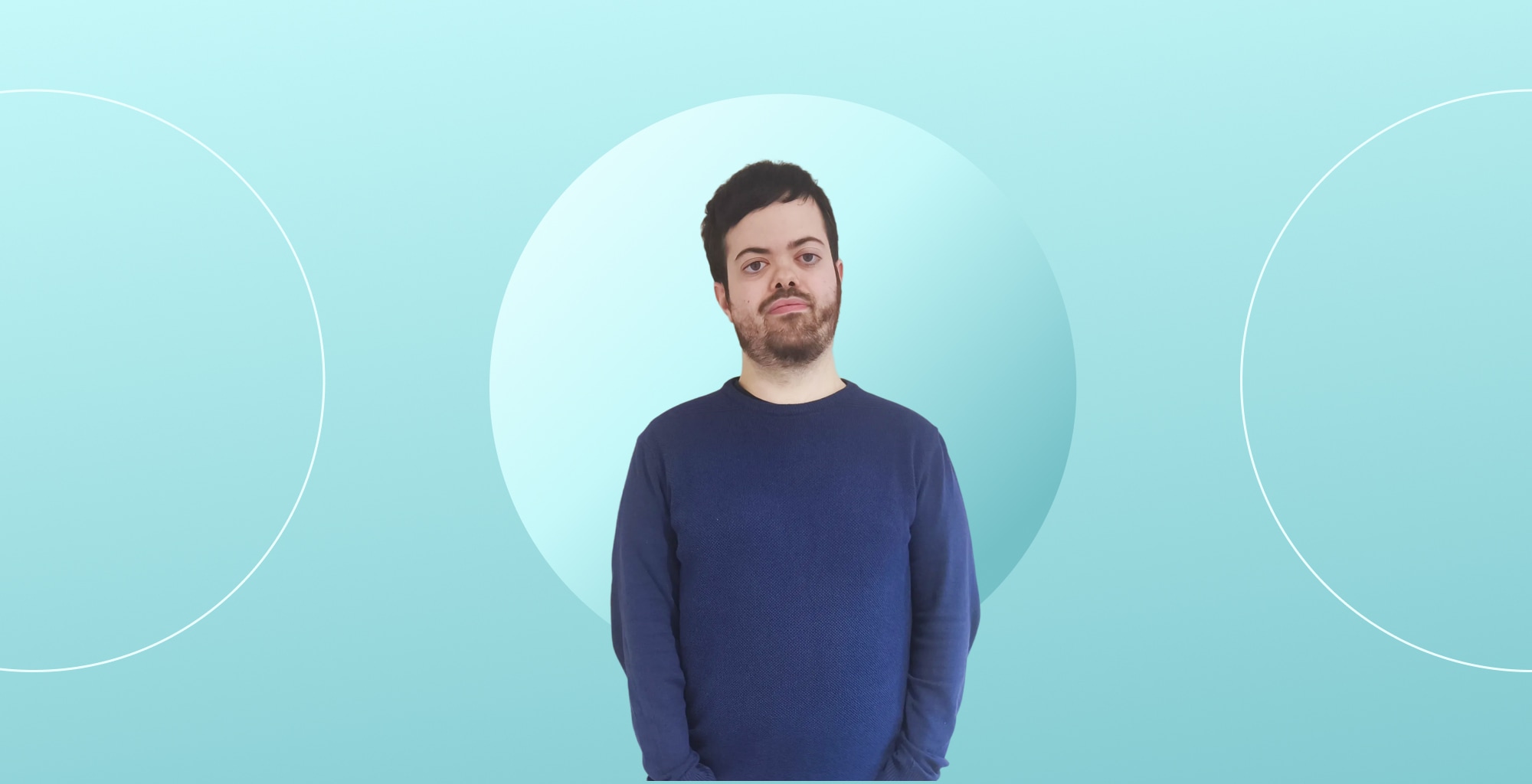

Breaking barriers: my journey of inclusion and talent at Telefónica Tech
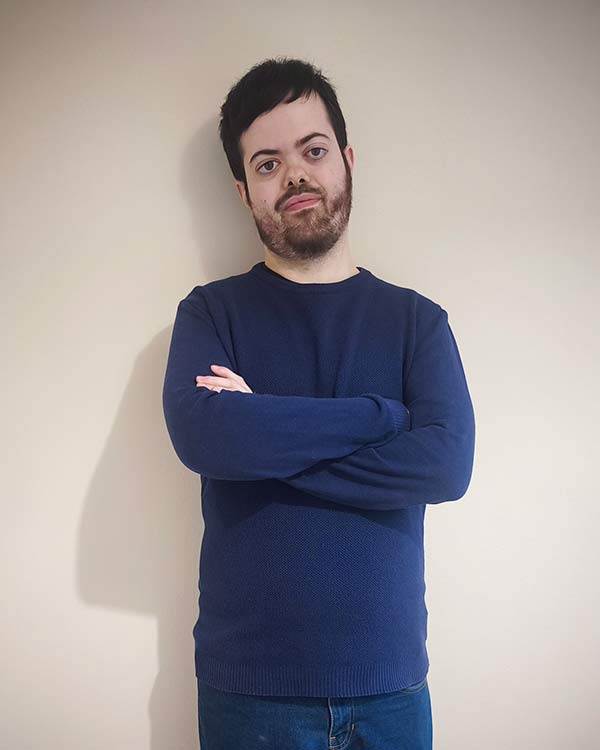
To mark the International Day of Persons with Disabilities, celebrated every year on December 3rd, we’d like to share the inspiring story of our colleague Ramón Carrera, a public cloud specialist at Telefónica Tech.
Thanks to Fundación GoodJob (GoodJob Foundation) and its IMPACT programme, Ramón was able to receive training and join Telefónica Tech. His story highlights the value of inclusion in the workplace and how diversity enriches companies.
This interview is a chance to hear first-hand how training, effort and institutional support can open doors and break down barriers, proving that talent knows no limits.
Could you tell us a bit about yourself and your background before joining Telefónica Tech?
Since I was little, aside from music, I’ve always been fascinated by the world of computing. You could almost say I was born with a computer in my hands. Because of my audiovisual disability, I was always wearing glasses, so I kind of fit the classic IT profile.
And what happens when you combine both worlds? You develop an interest in music composition and improvisation tools, recording piano sessions in high quality, or creating sounds using virtual synthesizers, among other things. I'm also a gamer and an otaku, both of which inspire me culturally and emotionally.
As for my background, after finishing a higher-level vocational qualification in app development and joining the job market, the pandemic forced me to look for new opportunities. That’s when I came across the IMPACT programme by Fundación GoodJob, and that’s where this story begins.
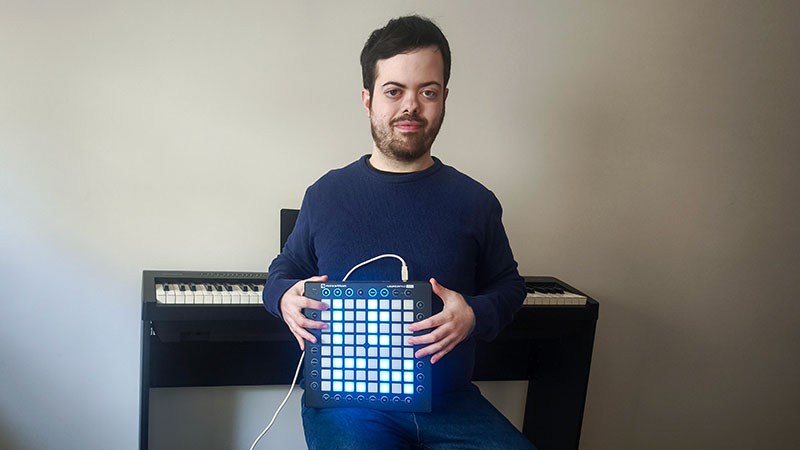
Computing and music have driven me since I was a child; combining both worlds inspires me and pushes me to keep creating.
How did you become part of this team? Can you tell us more about Fundación GoodJob and its training programmes?
Fundación GoodJob’s mission is to train people with disabilities and help them find employment. The IMPACT programme included two tracks: #include, focused on cybersecurity, and #cloud, focused on cloud solutions.
Because I was already curious and had previously explored cloud services, I chose the #cloud track, which was in its first edition at the time. It was incredibly helpful for learning new things.
Fundación GoodJob gave me the opportunity to train in Cloud and access a job that allows me to keep growing.
How would you describe your personal experience with disability inclusion in the workplace before starting with GoodJob?
Before GoodJob, I only had the chance to work as a developer for a year, on a temporary contract. So, despite it being quite different from my previous role, the opportunity I’ve had through GoodJob has been especially valuable to me.
What challenges did you face when you started your technical training, and how did you overcome them?
The biggest challenge is the uncertainty, wondering if what you're doing is right, and whether your disability will create obstacles. I know every case is different, but fortunately, thanks to technology, many barriers are disappearing for certain disabilities.
In my case, because the training was online, I didn’t face any barriers, I’ve always adapted my environment. Visually, I use browser extensions to work in dark mode whenever possible, and I use an enlarged interface so I don’t miss important information. As for hearing, because of my deafness, I rely on a wireless connection from the computer to my hearing aids to stay connected.
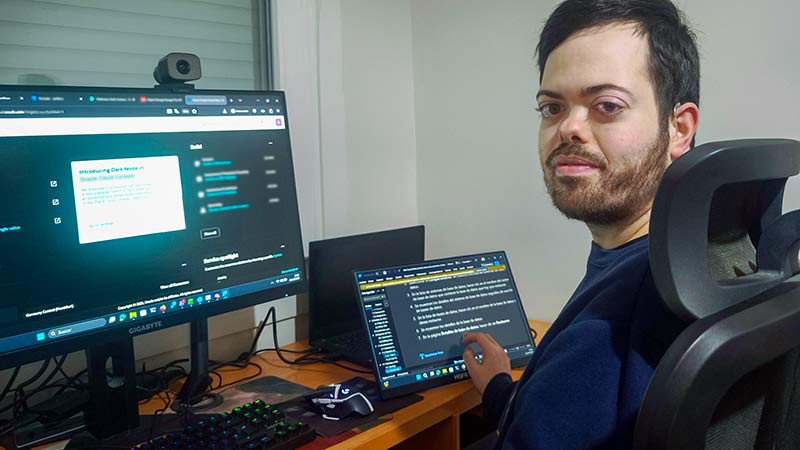
Thanks to technology and an adapted environment, barriers are becoming smaller every day for people with disabilities.
At Telefónica Tech you work as a public cloud specialist. Did you have any prior experience in this area? How was the transition from training to the professional world?
Although I had worked as a developer and had some exposure to cloud services, the transition was fairly smooth. It can feel overwhelming at first, but once you get used to it, it’s usually manageable if you’re open-minded. I suppose coming from a tech background made it easier for me to adapt.
What was the onboarding process like for you at the company?
After completing the training programme, once you finish the assigned work and pass an evaluation, you’re added to a job pool. When a vacancy comes up, they notify you and you can choose to accept it if you're interested.
Once I joined Telefónica Tech, I had regular follow-ups to evaluate how I was settling in and to address any needs that came up. Communication is essential for effectively managing workplace environments and addressing participants’ concerns.
Communication and follow-up are key to real and effective integration in the workplace.
At Telefónica Tech we’re committed to inclusion. How do you perceive this inclusive culture? Have you felt supported throughout your journey?
I’ve been treated with respect and I’ve always felt like just another team member, which is exactly the kind of integration I was looking for.
Also, having the right channels in place to report any disability-related issues, along with the effective communication of institutional information to all employees, really shows how committed the company is.
So I’d like to thank my colleagues and especially my manager for being aware of my circumstances. Even though I’m very resourceful when faced with challenges, I appreciate every kind gesture they’ve shown me. That’s what I call great support!
True integration is when you’re treated like any other colleague, with respect and attention to your needs.
How has your personal and professional life changed since joining the training programme and working at Telefónica Tech?
Professionally, I’ve gained stability. I’m no longer stuck in temporary contracts or constantly worrying about what’s next. That’s opened up new opportunities in my personal life too, like considering the idea of starting a new chapter and maybe even building a family someday.
Why is it important to mark days like today, December 3rd, the International Day of Persons with Disabilities?
 I strongly believe that people with disabilities bring great value to society and are capable of adapting to any environment or situation, as long as their needs are taken into account. It’s essential to treat them equally, like anyone else.
Also, being part of this community often means facing bigger challenges and having to make an extra effort, but we’re here to fight and stand up for our worth. There’s still a long way to go to eliminate the stigma that lingers in some people’s perception.
People with disabilities bring value to society and deserve to be treated equally.
What would you say to someone with a disability who wants to get into the tech sector?
If they don’t have the basics yet, I’d tell them to practise or sign up for an introductory course, it’ll help a lot. Also, take it slow, because at some point, that technology you’re learning becomes an extension of yourself as you get more confident and natural with it. It’s all about being consistent, brave and persistent.
The technology you learn can become an extension of yourself—if you stay consistent and persistent.