 Cloud & Business Apps
 Cybersecurity
 Data & AI
 IoT & Connectivity
 Industry
 Health
 Banking and Finance
 Public Sector
 Retail
 Tourism and Leisure
 Transport & Logistics
 Energy & Utilities
 Smart Cities
Sofía Amores
I work as a Healthcare Product & Delivery Lead within Telefónica Tech’s Data & AI division, where we develop technology solutions to address real-world healthcare challenges, supporting projects from product conception through to deployment into production.
Although I do not come from a healthcare background, that is precisely what makes me appreciate the impact of what we do even more. I firmly believe that technology should serve people, and in healthcare that translates into something very tangible: helping healthcare professionals do their jobs better and enabling patients to receive faster, more accurate care.
AI is also evolving at an extraordinary pace, making this sector a constant learning environment where there is still a great deal to be done.

From mobile mammography units to AI: how technology is strengthening breast cancer screening
Did you know that breast cancer screening is Spain's longest-running early detection programme? More than forty years ago, before automated appointment systems or electronic health records existed, women would find out that mobile mammography units were coming to their village through an announcement made by the parish priest during Mass. A great deal has changed since then, but the objective remains the same: detect breast cancer early and reach all women. This 19 October, World Breast Cancer Day, we at Telefónica want to explain how Artificial Intelligence can help screening programmes continue to fulfil that mission. The origins of breast cancer screening in Spain In the early 1980s, the Spanish Association Against Cancer (AECC) began deploying mobile units across Spain, trucks and vans equipped with mammography machines, travelling across the country to reach even the smallest villages. This brought mammography to women living far from hospitals who would otherwise have found it difficult to access screening. With no centralised records or appointment systems, communities themselves played a key role in informing women: announcements were made by the parish priest during Mass or through local council notices. Those campaigns laid the foundations for early detection in Spain. In 1983, the AECC developed an early diagnosis protocol adapted to Spain and worked with health authorities to implement it nationwide. Throughout the 1990s, screening was progressively incorporated into the public health services of Spain's autonomous communities, and by the early 2000s it had been implemented across virtually the entire country. Today, more than 70% of women aged between 50 and 69 attend routine mammography screening. In 1983, an Early Diagnosis Programme adapted to Spain and based on international standards was developed. Source (in Spanish): AECC blog. Breast cancer screening was created to bring early detection within reach of all women, wherever they lived. The most commonly diagnosed cancer in women Breast cancer remains the most commonly diagnosed cancer among women in Spain. According to the Cancer figures in Spain 2026 report by the Spanish Society of Medical Oncology (SEOM) and the Spanish Network of Cancer Registries (REDECAN), more than 38,000 new cases are expected to be diagnosed this year. For decades, it was also the cancer responsible for the highest number of deaths among women, until lung cancer overtook it for the first time in 2024. Today, five-year net survival for breast cancer stands at 86%, one of the highest rates among all cancers. Advances in treatment have contributed to this progress, as have early detection and high participation in screening programmes. And although it may seem paradoxical, an increase in the number of cases diagnosed each year is not necessarily bad news: as SEOM explains, an effective screening programme initially increases the number of diagnoses by identifying cancers earlier, and subsequently reduces mortality, according to the SEOM Cancer figures in Spain 2026 report (in Spanish). But earlier detection requires considerable capacity: hundreds of thousands of mammograms every year that need to be reviewed rigorously and without delay. This is precisely where technology can make a difference. Detecting more cancers at an early stage is key to improving survival and reducing mortality. How AI supports breast cancer screening Every screening programme involves an enormous volume of work. In line with European breast cancer screening guidelines, Spanish programmes use double reading: each mammogram is reviewed independently by two radiologists and, if their assessments differ, a third opinion is sought. This approach strengthens diagnostic quality, but also increases the clinical workload for radiology services that are handling an ever-growing number of studies. This is where Artificial Intelligence can add particular value. From a technical perspective, algorithms analyse each mammogram and assign it a risk score, highlight suspicious areas directly on the image and allow worklists to be prioritised so that specialists can review the highest-priority cases first. They can also act as an additional reader within a double-reading workflow, or as a safety net that alerts radiologists when a study contains highly suspicious findings. AI helps prioritise higher-risk cases and enhances radiologists' capacity without replacing their clinical judgement. This does not replace the radiologist's clinical judgement. The radiologist remains responsible for validating the report, while AI provides additional information and can help them focus their time on the cases that require the most attention. The scientific evidence in this area is already substantial. In Germany, the PRAIM study, published in Nature Medicine, evaluated AI in routine clinical practice within the national screening programme, involving more than 460,000 women. Radiologists supported by AI detected 6.7 cancers per 1,000 women compared with 5.7 without AI, representing a 17.6% higher cancer detection rate, without increasing recall rates for further assessment. Image from the study: suspicious region highlighted (bottom right) in the AI algorithm viewer so that the radiologist can review it efficiently. Source: PRAIM study. The result is a more streamlined and efficient screening process that can reach more women without compromising diagnostic quality. For patients, this can mean earlier diagnoses, shorter waits and less uncertainty. ■ As with any clinical application used to support diagnosis, not every AI system is suitable for clinical use. An algorithm used to support screening must be CE marked as a medical device, be transparent about the data used for training and validation and about its limitations, and allow its thresholds to be adjusted to the needs of each screening programme. It also needs to integrate seamlessly with hospital systems (PACS and RIS) without disrupting existing workflows, so that it can provide reliable support while remaining under specialist supervision. Clinical AI only adds value when it is safe, transparent and integrated under professional supervision. What technology cannot replace We do not want to end this article without highlighting something essential: screening does not end when the mammogram has been read. It ends when the woman receives her result, understands what it means and knows what happens next. AI can help specialists reach more patients and help ensure that every study is reviewed, but its value lies not only in the algorithm itself. It also depends on how it is integrated throughout the care pathway and on professionals having the time to explain, support and guide patients. The challenge is therefore not only clinical; it is also about care delivery and the human dimension. Technology can increase the system's capacity, but the trust of a woman attending a mammography appointment is earned through every conversation and every result delivered on time. Technology increases the system's capacity, but trust is built through information, support and timely results. Our role as a technology integrator for clinical AI At Telefónica, we help healthcare organisations introduce clinical AI where it can add value: within real-world clinical workflows. Our role is to integrate algorithms securely and in a coordinated way into care pathways, enabling healthcare professionals to benefit from these capabilities without losing clinical control or disrupting established ways of working. We take a vendor- and deployment-model-agnostic approach, providing a single point of integration, management, operation and maintenance. Our proposition is supported by a broad portfolio of AI-based diagnostic support solutions for a range of conditions, complemented by specialist providers. This enables us to combine clinical, technological and integration capabilities so that AI delivers value where it is genuinely needed: within the specialist's workflow and for the benefit of the patient. On a day such as World Breast Cancer Day, we want to emphasise that technology only makes sense when it serves people. Not as a replacement for medical expertise, but as what it should be: a tool that enhances specialists' ability to detect disease earlier, treat more effectively and support patients with greater precision. Integrating AI into clinical pathways turns its potential into practical support for healthcare professionals and patients. AI & Data World Brain Day: How AI is helping diagnose neurological disorders July 22, 2026
October 19, 2026
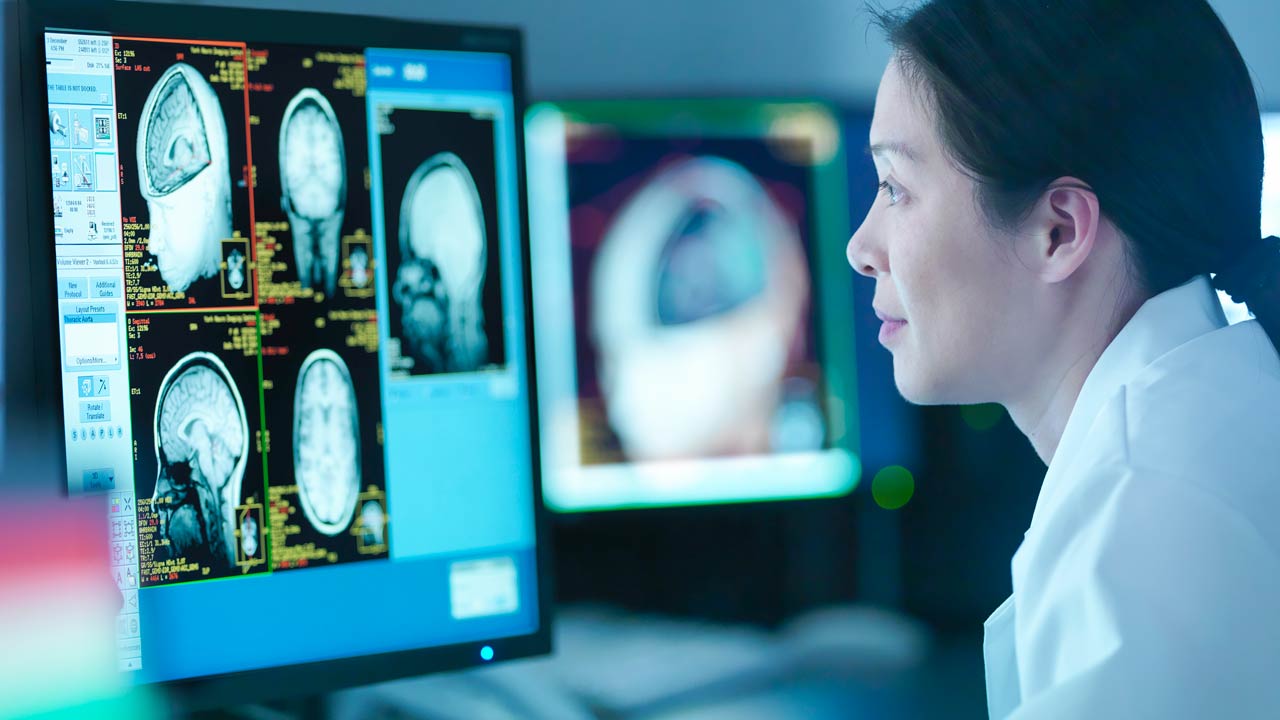
World Brain Day: How AI is helping diagnose neurological disorders
Brain health: access for all Every 22 July marks World Brain Day, an initiative led by the World Federation of Neurology. This year, under the theme 'Brain health: access for all', the campaign highlights a striking fact: more than 3.4 billion people worldwide are currently living with a neurological disorder, making these conditions the leading cause of disability globally, according to the World Federation of Neurology. At Telefónica, through our Telefónica Tech business unit, we have long been developing Artificial Intelligence solutions for medical imaging diagnosis and biomarker analysis, and today we want to explain how this technology can make a real difference to the early detection of conditions such as Alzheimer's disease, Parkinson's disease and cerebrovascular events such as stroke. Brain health requires early access, prevention and technology that brings diagnosis within reach of more people. Why early diagnosis matters (and how AI is making it possible) In Spain, more than 23 million people are living with a neurological disorder. While figures like these may seem overwhelming, there is also reason for optimism: it is estimated that up to 90% of strokes and 40% of Alzheimer's disease cases could be prevented or significantly delayed through an appropriate approach to brain health. In most cases, earlier diagnosis is key. In neurodegenerative diseases such as Alzheimer's disease and Parkinson's disease, as well as cerebrovascular events such as stroke, the window for intervention narrows dramatically the later the condition is detected. Early diagnosis improves the patient's prognosis and opens the door to treatments that can deliver better outcomes when introduced at the earliest stages of the disease. Indeed, one of the key messages behind this year's World Brain Day campaign, 'Brain health: access for all', is that earlier access to diagnosis changes lives. Earlier detection enables earlier intervention: AI helps reduce delays and improve clinical care from the earliest stages. This is where Artificial Intelligence becomes a valuable ally for healthcare professionals. At Telefónica Tech, we work with AI solutions that support different stages of the diagnostic pathway across a range of neurological conditions: from analysing voice biomarkers to detect signs of mild cognitive impairment within seconds, to supporting medical imaging diagnosis in cerebrovascular disease. Below, we explain how these solutions work in practice. Voice as a tool for the early detection of mild cognitive impairment One of the earliest signs of cognitive impairment may be reflected in the way we speak. With this in mind, we offer AcceXible's solution, a non-invasive AI-powered preventive tool capable of detecting a patient's cognitive status at an early stage in just 60 seconds. Voice biomarker analysis to detect potential neurological disorders, AcceXible. The process is straightforward: through an intuitive interface, the healthcare professional guides the patient through the assessment while speech and language algorithms analyse their voice biomarkers to detect possible memory impairment and assess cognitive function. The main benefits of this tool include shorter diagnostic times, improved early detection of disease and enhanced diagnostic accuracy. ■ This solution, which carries CE Class IIa marking, has two main clinical use cases: firstly, screening patients to refer them to the appropriate specialist or treatment and optimise clinical care; secondly, ongoing monitoring of patients' cognitive status over time. Voice can provide an early signal of potential cognitive impairment, enabling fast and non-invasive assessment. AI in brain CT: precision when every minute counts When dealing with cerebrovascular conditions such as stroke, every minute counts. That is why we offer Harrison.ai's solution, a clinical decision support tool for non-contrast CT (NCCT) scans capable of detecting up to 130 radiological findings, including a wide range of conditions requiring rapid intervention. It works by automatically highlighting the location of findings on medical images and prioritising worklists according to clinical severity, helping reduce response times for the most critical cases. Its capabilities extend from bone lesions to stroke, providing information that can even help identify the type of stroke (ischaemic or haemorrhagic), allowing the clinician to determine the most appropriate treatment. Analysis of non-contrast computed tomography (NCCT) scans, Harrison.ai. The benefits associated with this solution, which carries CE Class IIb marking, include rapid response, improved diagnostic efficiency and accuracy, and greater patient comfort and safety, as it works with non-contrast studies. ■ This solution is particularly valuable as diagnostic support in hospitals or healthcare centres without immediate access to a specialist, as well as in busy emergency departments. It is also one of the areas in which we continue to expand our collaboration with Harrison.ai. In cerebrovascular disease, AI can help prioritise critical cases and support clinical decision-making when time is of the essence. Our role as a clinical AI technology integrator beyond the algorithm At Telefónica Tech we act as a technology integrator, facilitating the deployment of AI algorithms and the coordination of clinical workflows so that healthcare professionals can focus on patient care. We place technology at the service of clinical needs, taking a vendor-agnostic approach to providers and deployment models, while offering a single point of integration and management supported by services designed to simplify operations and maintenance. We offer a broad portfolio of AI-powered diagnostic support algorithms covering multiple conditions, strengthened by specialist partners such as AcceXible, a leader in voice biomarker analysis for the early detection of cognitive impairment, and Harrison.ai, with certified solutions for medical imaging diagnosis in cerebrovascular disease. On World Brain Day, we want to emphasise that technology only has value when it serves people. Not as a substitute for medical expertise, but as what it should be: a tool that enhances specialists' ability to detect disease earlier, support clinical decision-making and monitor patients throughout their care pathway. The value of clinical AI lies in integrating it safely, effectively and in line with the real-world workflows of healthcare professionals. AI & Data Detect earlier, treat better: AI for the early diagnosis of prostate cancer June 11, 2026
July 22, 2026

Detect earlier, treat better: AI for the early diagnosis of prostate cancer
Every year on 11 June, World Prostate Cancer Day raises awareness of the most common cancer in men and the second deadliest, according to data from the Spanish Society of Medical Oncology (SEOM). At Telefónica Tech, we have been working for some time on solutions that apply Artificial Intelligence to diagnostic imaging, and today we want to explain how this technology can make a real difference in the early detection of this disease. Early detection remains key to improving outcomes in prostate cancer, and AI can help accelerate that process. The most common cancer in men: prostate cancer figures we cannot ignore Did you know that around 1 in 8 men will be diagnosed with prostate cancer during their lifetime? As one of the most commonly diagnosed cancers in men, early detection remains a critical priority. Survival, however, is relatively favourable compared with other types of cancer: the five-year net survival rate exceeds 90%, a figure that reflects the positive impact of early detection through prostate-specific antigen (PSA) testing and the identification of cases at an early stage. Even so, survival is neither uniform nor guaranteed. Not all prostate cancers are the same, and the difference between an early and a late diagnosis can be decisive for both prognosis and the patient’s quality of life. Detecting it early remains one of the greatest challenges in oncology, and this is precisely where technology can help. Prostate cancer is very common, but detecting it early can make a decisive difference. The clinical and healthcare challenges of prostate cancer diagnosis In recent years, cancer mortality has fallen and survival rates have improved, largely thanks to prevention and diagnosis at earlier stages. Nevertheless, prostate cancer remains a major healthcare challenge, and not only for clinical reasons. Magnetic resonance imaging (MRI) is now the reference imaging modality for detecting, localising and assessing clinically significant prostate cancer. When the result is negative and no suspicious lesions are identified, unnecessary biopsies can be avoided, with all that this entails: they are invasive procedures, they cause anxiety for patients and they are not without complications. Their impact is therefore both clinical and psychological. The problem is that access to this examination is not straightforward. For example, the average waiting time for an MRI scan in Spain is 73 days, according to the 2025 Spanish Healthcare Barometer. And once the scan has been performed, the images must be interpreted by a specialist radiologist, an increasingly scarce resource. Added to this is growing pressure on healthcare services: more patients to care for, workforce growth that is not keeping pace, and radiology departments operating at the limits of their capacity. The result is a bottleneck that slows diagnosis precisely when speed matters most. The challenge is not only clinical: it is also a healthcare delivery challenge, because every delay can postpone important decisions for the patient. The role of AI in the early diagnosis of prostate cancer Although AI does not solve the shortage of specialists, it can help relieve this bottleneck. The value of AI here is not only about accuracy, but also about capacity: enabling healthcare systems to reach more patients without compromising diagnostic quality. From a technical perspective, AI algorithms can perform automatic prostate segmentation, carry out quantitative image analysis and generate structured reports based on the PI-RADS system, the international standard for classifying prostate lesions. This does not replace the specialist’s clinical judgement, but provides a more complete and consistent starting point. It reduces the time spent on systematic review tasks and enables specialists to focus on the most urgent cases. In addition, precise contours of detected lesions can be generated to support targeted biopsy planning, improving procedural accuracy and reducing patient discomfort. From a healthcare perspective, the impact is also significant. AI can automatically prioritise higher-risk cases, provide automated second-reader support and reduce variability in interpretation across different centres and professionals. This is particularly valuable in settings with limited access to specialist expertise: it helps standardise diagnostic quality regardless of accumulated experience, contributing to shorter overall process times and increasing the system’s capacity to care for more patients without compromising clinical rigour. AI-assisted diagnostic workflow. The result is faster, more efficient care that can support more patients without compromising diagnostic quality. In this process, Artificial Intelligence always acts as a clinical decision support tool, not as a replacement for the healthcare professional. Its value lies in helping clinicians prioritise, interpret and structure available information more effectively. For patients, this translates into tangible benefits: shorter waiting times, earlier diagnosis and the possibility of avoiding unnecessary invasive procedures. AI does not replace the specialist: it helps them prioritise, interpret more effectively and reach more patients sooner. Clinical AI requires safeguards: regulatory compliance, transparency and integration However, when it comes to tools used in clinical diagnosis, not every AI solution is suitable for clinical use. The first requirement is regulatory compliance: an algorithm designed to support clinical decision-making must carry CE marking as a medical device. This is not an administrative formality, but a guarantee that the product has been assessed and validated in accordance with regulatory requirements and the safety and performance standards required for use in real-world clinical environments. Beyond regulation, transparency is a fundamental requirement for the clinical adoption of Artificial Intelligence. Healthcare professionals need to understand the data used to develop and validate an algorithm, the situations in which it performs best and its limitations. In clinical diagnosis, AI is only useful if it is safe, transparent, regulated and integrated into the clinical workflow. It is also important that tools allow parameters such as sensitivity and specificity thresholds to be adjusted according to the needs of each organisation, and that they provide clear and understandable information about detected findings. Only then can AI be used as a reliable aid to clinical decision-making, while always maintaining specialist oversight and judgement. Finally, a clinically effective solution must be able to integrate seamlessly with hospital systems (PACS and RIS) without disrupting or slowing existing workflows. Our role as a clinical AI technology integrator beyond the algorithm At Telefónica Tech, we act as a technology integrator, facilitating the deployment of algorithms and the coordination of clinical workflows so that healthcare professionals can focus on patient care. We put technological capabilities at the service of healthcare needs through a vendor-agnostic and deployment-agnostic approach, providing a single integration and management point with services that ensure ongoing operation and maintenance. We have a broad portfolio of AI-powered diagnostic support algorithms covering multiple clinical conditions, strengthened by specialist providers within our Wayra innovation ecosystem, such as Quibim, a leader in prostate imaging, whose certified solutions are deployed in hospitals across Spain, the United Kingdom, the United States and other countries. On World Prostate Cancer Day, we want to emphasise that technology only makes sense when it serves people. Not as a substitute for medical expertise, but as what it should be: a tool that enhances the specialist’s ability to detect earlier, treat more effectively and support patients with greater precision. The value lies not only in the algorithm itself, but in integrating it effectively so that it works in real-world clinical practice. AI & Data Precision medicine: your DNA is a key tool to take care of your health July 15, 2024
June 11, 2026