 Cloud & Business Apps
 Cybersecurity
 Data & AI
 IoT & Connectivity
 Industry
 Health
 Banking and Finance
 Public Sector
 Retail
 Tourism and Leisure
 Transport & Logistics
 Energy & Utilities
 Smart Cities

World Brain Day: How AI is helping diagnose neurological disorders
Brain health: access for all
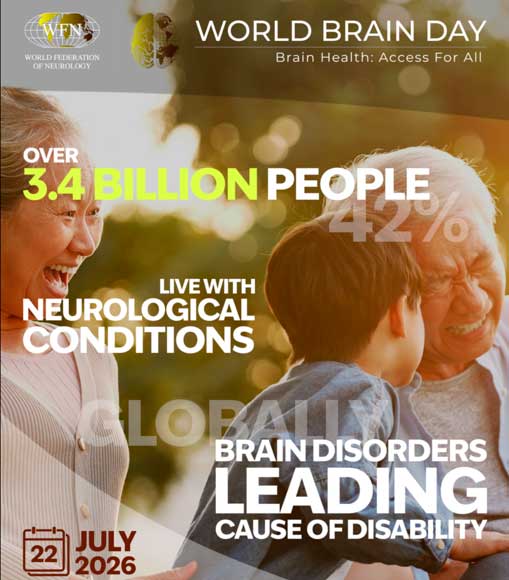 Every 22 July marks World Brain Day, an initiative led by the World Federation of Neurology. This year, under the theme 'Brain health: access for all', the campaign highlights a striking fact: more than 3.4 billion people worldwide are currently living with a neurological disorder, making these conditions the leading cause of disability globally, according to the World Federation of Neurology.
At Telefónica, through our Telefónica Tech business unit, we have long been developing Artificial Intelligence solutions for medical imaging diagnosis and biomarker analysis, and today we want to explain how this technology can make a real difference to the early detection of conditions such as Alzheimer's disease, Parkinson's disease and cerebrovascular events such as stroke.
Brain health requires early access, prevention and technology that brings diagnosis within reach of more people.
Why early diagnosis matters (and how AI is making it possible)
In Spain, more than 23 million people are living with a neurological disorder. While figures like these may seem overwhelming, there is also reason for optimism: it is estimated that up to 90% of strokes and 40% of Alzheimer's disease cases could be prevented or significantly delayed through an appropriate approach to brain health. In most cases, earlier diagnosis is key.
In neurodegenerative diseases such as Alzheimer's disease and Parkinson's disease, as well as cerebrovascular events such as stroke, the window for intervention narrows dramatically the later the condition is detected. Early diagnosis improves the patient's prognosis and opens the door to treatments that can deliver better outcomes when introduced at the earliest stages of the disease.
Indeed, one of the key messages behind this year's World Brain Day campaign, 'Brain health: access for all', is that earlier access to diagnosis changes lives.
Earlier detection enables earlier intervention: AI helps reduce delays and improve clinical care from the earliest stages.
This is where Artificial Intelligence becomes a valuable ally for healthcare professionals. At Telefónica Tech, we work with AI solutions that support different stages of the diagnostic pathway across a range of neurological conditions: from analysing voice biomarkers to detect signs of mild cognitive impairment within seconds, to supporting medical imaging diagnosis in cerebrovascular disease.
Below, we explain how these solutions work in practice.
Voice as a tool for the early detection of mild cognitive impairment
One of the earliest signs of cognitive impairment may be reflected in the way we speak. With this in mind, we offer AcceXible's solution, a non-invasive AI-powered preventive tool capable of detecting a patient's cognitive status at an early stage in just 60 seconds.
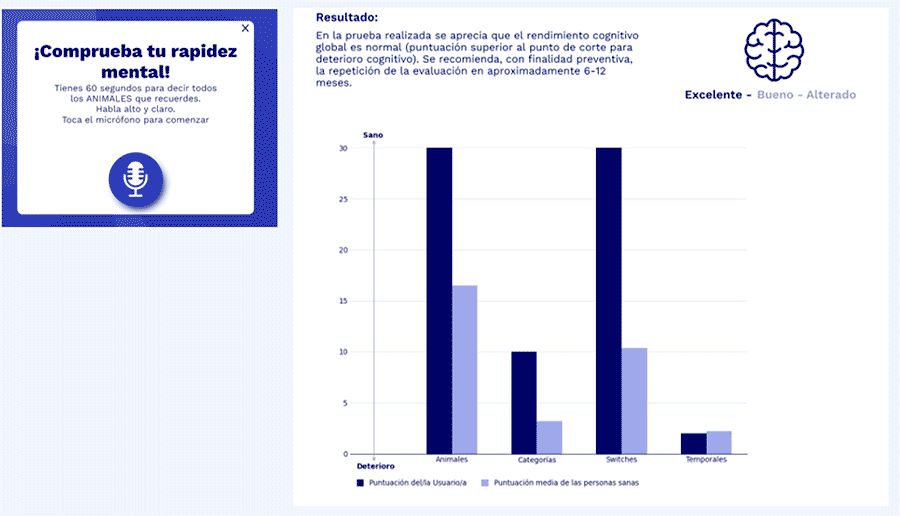 Voice biomarker analysis to detect potential neurological disorders, AcceXible.
The process is straightforward: through an intuitive interface, the healthcare professional guides the patient through the assessment while speech and language algorithms analyse their voice biomarkers to detect possible memory impairment and assess cognitive function.
The main benefits of this tool include shorter diagnostic times, improved early detection of disease and enhanced diagnostic accuracy.
■ This solution, which carries CE Class IIa marking, has two main clinical use cases: firstly, screening patients to refer them to the appropriate specialist or treatment and optimise clinical care; secondly, ongoing monitoring of patients' cognitive status over time.
Voice can provide an early signal of potential cognitive impairment, enabling fast and non-invasive assessment.
AI in brain CT: precision when every minute counts
When dealing with cerebrovascular conditions such as stroke, every minute counts. That is why we offer Harrison.ai's solution, a clinical decision support tool for non-contrast CT (NCCT) scans capable of detecting up to 130 radiological findings, including a wide range of conditions requiring rapid intervention.
It works by automatically highlighting the location of findings on medical images and prioritising worklists according to clinical severity, helping reduce response times for the most critical cases. Its capabilities extend from bone lesions to stroke, providing information that can even help identify the type of stroke (ischaemic or haemorrhagic), allowing the clinician to determine the most appropriate treatment.
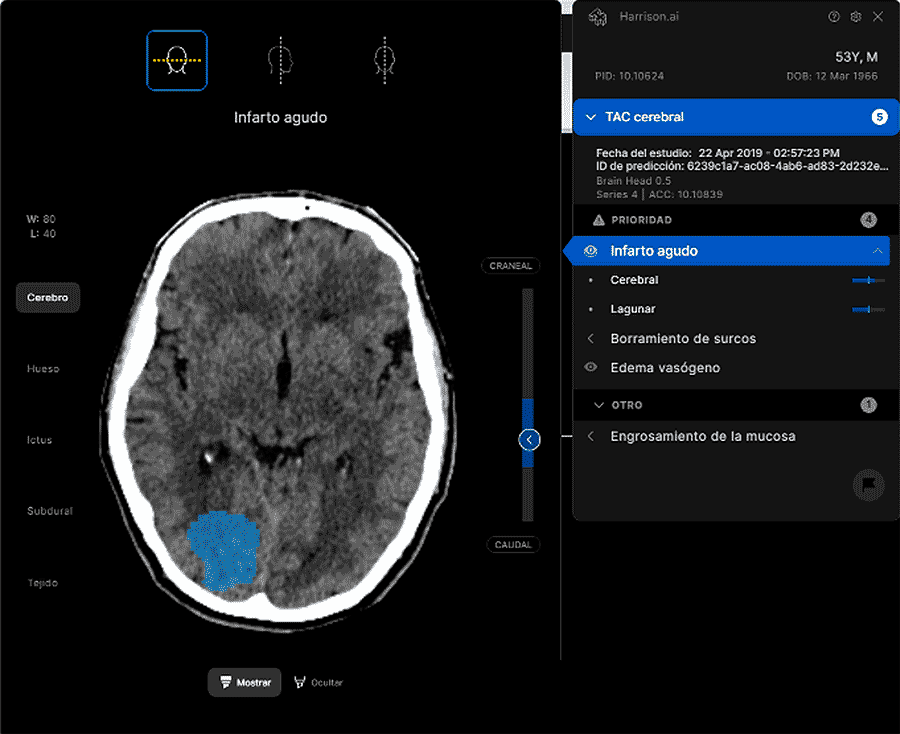 Analysis of non-contrast computed tomography (NCCT) scans, Harrison.ai.
The benefits associated with this solution, which carries CE Class IIb marking, include rapid response, improved diagnostic efficiency and accuracy, and greater patient comfort and safety, as it works with non-contrast studies.
■ This solution is particularly valuable as diagnostic support in hospitals or healthcare centres without immediate access to a specialist, as well as in busy emergency departments. It is also one of the areas in which we continue to expand our collaboration with Harrison.ai.
In cerebrovascular disease, AI can help prioritise critical cases and support clinical decision-making when time is of the essence.
Our role as a clinical AI technology integrator beyond the algorithm
At Telefónica Tech we act as a technology integrator, facilitating the deployment of AI algorithms and the coordination of clinical workflows so that healthcare professionals can focus on patient care. We place technology at the service of clinical needs, taking a vendor-agnostic approach to providers and deployment models, while offering a single point of integration and management supported by services designed to simplify operations and maintenance.
We offer a broad portfolio of AI-powered diagnostic support algorithms covering multiple conditions, strengthened by specialist partners such as AcceXible, a leader in voice biomarker analysis for the early detection of cognitive impairment, and Harrison.ai, with certified solutions for medical imaging diagnosis in cerebrovascular disease.
On World Brain Day, we want to emphasise that technology only has value when it serves people. Not as a substitute for medical expertise, but as what it should be: a tool that enhances specialists' ability to detect disease earlier, support clinical decision-making and monitor patients throughout their care pathway.
The value of clinical AI lies in integrating it safely, effectively and in line with the real-world workflows of healthcare professionals.