 Hybrid Cloud
 Cybersecurity
 AI & Data
 IoT & Connectivity
 Business Applications
 Intelligent Workplace
 Consulting & Professional Services
 Small Medium Enterprise
 Health and Social Care
 Industry
 Retail
 Tourism and Leisure
 Transport & Logistics
 Energy & Utilities
 Banking and Finance
 Smart Cities
 Public Sector

Poverty Insights in Guatemala using Big Data
March 16, 2017
"
No poverty" is the first of the U.N.’s 17
Sustainable Development Goals and it is closely linked with several other goals, including zero hunger, reduced inequality, and good health and well-being. Alleviating poverty, then, can have positive ramifications for several other development dimensions. Here at
LUCA, we’re committed to doing what we can with our
Big Data technology to address problems like poverty.
A
recent study conducted by a team of
World Bank researchers, including members from
LUCA, found that
mobile data can be a valuable tool for predicting poverty rates based on location, which will allow for more effective poverty alleviation strategies. This initial study was conducted in
Guatemala and focused on five administrative regions, in order to determine if the study was effective on a smaller level before exploring possibilities to scale up. The study’s goal was to determine if using aggregated and anonymized
call detail records (CDRs) would be an
accurate predictor of geographical poverty characteristics.
Bringing location intelligence to poverty concentrations is important for countries like
Guatemala, where, unfortunately, poverty is on the rise. According to
World Bank statistics,
56% of the total population lived in poverty in 2000 and that number rose to almost 60% by the most recent estimates from 2014. But the overall divs, while important, cannot form the basis for an effective
poverty alleviation strategy.

To determine more specific poverty information, the
government of Guatemala conducts periodic
surveys and
censuses. These household-by-household surveys provide an accurate picture of
poverty distribution. The downside, though, is that these traditional methods are expensive and time-consuming. For example, the
most recent survey was conducted in 2014 and cost $2 million (USD) and 2 years to complete, and it only covered 11,500 households. Because of the
high costs of time and money, these surveys are conducted at rather sporadic intervals.
Poverty patterns change frequently, so having
updated information is key for
strategically targeting poverty reduction efforts. Governments like Guatemala’s typically have less budget to conduct surveys, so they often have to base their aid planning on incomplete or out of date information. This results in
poverty-related public expenditures that are, tragically, not able to accurately target those most in need.
The
World Bank study using CDRs tries to discover if this data could be a
potential supplement for the more expensive traditional surveys. By contrast, this
CDR-based study cost approximately $100,000 (USD) to conduct, the majority of which went towards the fixed cost of developing the computer algorithm. Additional surveys will thus be
significantly less expensive because the algorithm is already in place.
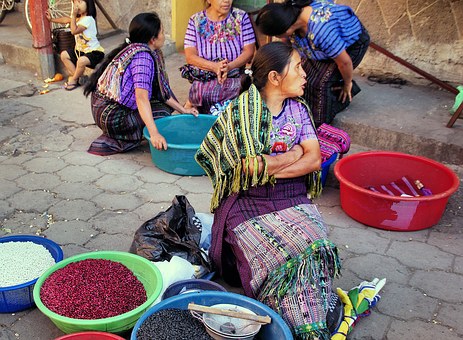 Figure 3: More accurate, updated data means poverty aid can be better targeted.
The study’s results are encouraging. Researchers
concluded
that
CDRs
can predict poverty distribution
fairly accurately
when measured against the collected data from recent surveys. Accuracy was higher in
urban areas
, where there are higher concentrations of poverty, due to the
penetration of mobile phone usage
.
Figure 3: More accurate, updated data means poverty aid can be better targeted.
The study’s results are encouraging. Researchers
concluded
that
CDRs
can predict poverty distribution
fairly accurately
when measured against the collected data from recent surveys. Accuracy was higher in
urban areas
, where there are higher concentrations of poverty, due to the
penetration of mobile phone usage
.
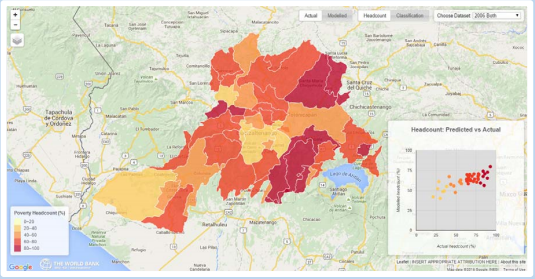 Figure 4: Actual Poverty Rates for Municipalities of Study.
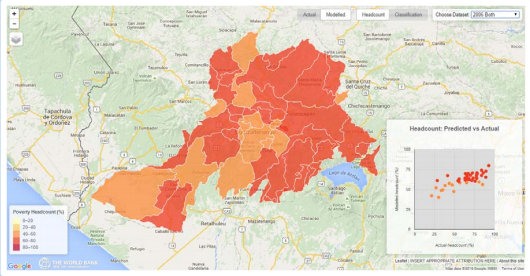 Figure 5: Modelled Poverty Rates differ in the Municipalities of Study. These conclusions mean that
CDR-based data collection can be used as a supplement to the more costly surveys to provide the Guatemalan government with updated,
real-time poverty information. Currently, the
CDR analysis does not fully match the accuracy of census data, but it is a
strong complement. Additionally, researchers theorize that using a larger data set than the initial five regions used for this study will allow for
greater accuracy and new possible applications of the data.
Figure 5: Modelled Poverty Rates differ in the Municipalities of Study. These conclusions mean that
CDR-based data collection can be used as a supplement to the more costly surveys to provide the Guatemalan government with updated,
real-time poverty information. Currently, the
CDR analysis does not fully match the accuracy of census data, but it is a
strong complement. Additionally, researchers theorize that using a larger data set than the initial five regions used for this study will allow for
greater accuracy and new possible applications of the data.
Enrique Frías, who works as one of our lead researchers in Telefónica and LUCA's R&D department said:
"This study will help to implement and measure public policies in a very effective way, it has the potential of changing how to tackle and advance in the fight against poverty."
 Figure 4: Big Data can be a valuable tool in the fight against poverty.
The potential for more affordable solutions for addressing poverty is growing, whether through the use of Big Data like CDRs or through combining
satellite imagery and Artificial Intelligence to map distribution.
LUCA is excited by the possibility of using
Big Data to more accurately target poverty efforts. Through our recently announced partnership with
UNICEF’s Magic Box program and other
Big Data for Social Good initiatives, we are encouraged at the progress that is being made to accomplish the goal of a
world without poverty.