 Cloud & Business Apps
 Cybersecurity
 Data & AI
 IoT & Connectivity
 Industry
 Health
 Banking and Finance
 Public Sector
 Retail
 Tourism and Leisure
 Transport & Logistics
 Energy & Utilities
 Smart Cities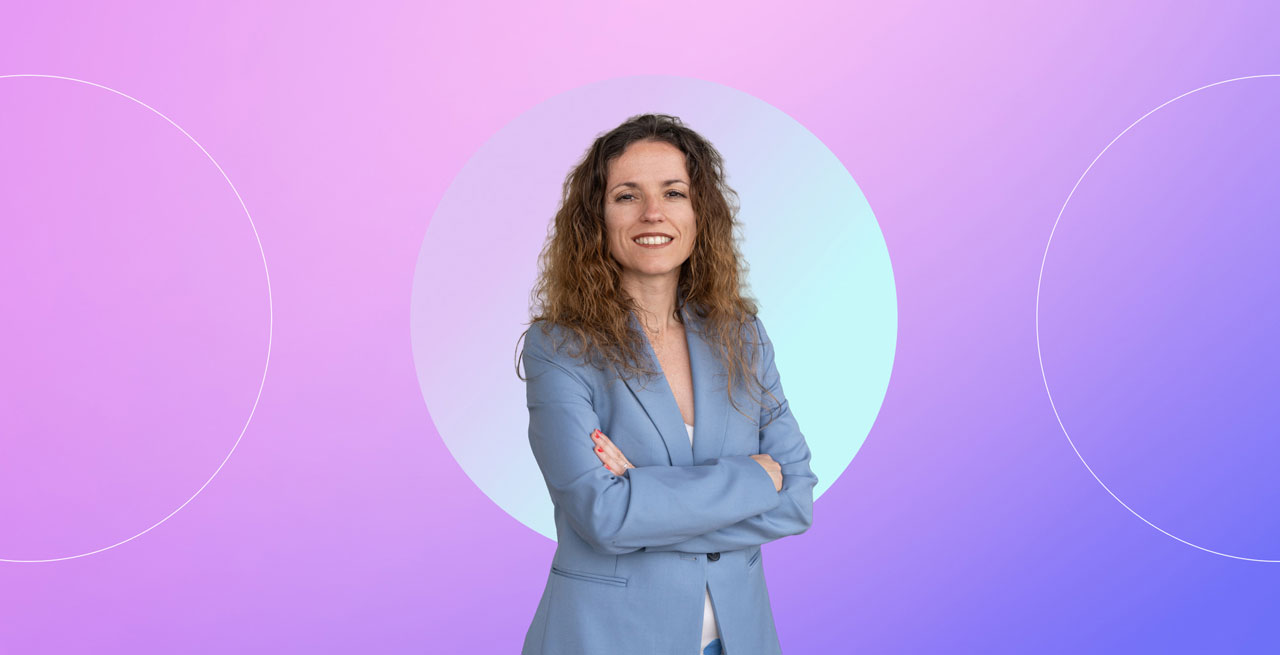

#WomenInTech: Ester Tejedor leads Cybersecurity operations
What do you do and what path led you there?
I currently lead Cybersecurity Technology and Operations at Telefónica Tech, heading teams that protect our clients’ information and systems. I coordinate strategic projects, oversee the SOCs and ensure the effectiveness of processes and tools against emerging threats. I also work closely with other teams to drive innovation and accelerate the growth of the company’s Cybersecurity business.
My journey began with a strong interest in mathematics and physics from an early age. After being inspired by a school talk about satellites and telecommunications, I pursued undergraduate and advanced engineering degrees, specializing in telematics and networks. That path gradually led me into Cybersecurity and ultimately to my current role.
Cybersecurity took an interest in me more than I did in it.
What is the biggest challenge facing a Cybersecurity expert?
The greatest challenge is maintaining an ultra fast ability to learn and adapt in the face of an adversary that is constantly evolving. Not being able to prevent 100 percent of attacks does not mean a lack of competence, it means accepting a fundamental reality of our sector: 100 percent security does not exist.
Cyber criminals operate with highly specialized teams, and our challenge in detection and response is to stay ahead, anticipate threats and respond instantly by combining technology, robust processes and teams that are prepared to learn and continuously improve.
In offensive security, our obsession is helping clients protect themselves better by identifying blind spots and vulnerabilities.
What skills do you believe are essential to succeed in the Cybersecurity sector?
Two skills: creativity, because to work in this field you need to constantly look for imaginative solutions; and collaboration, because in Cybersecurity nothing is achieved alone. Of course, solid experience and knowledge are essential.
Incidents are managed more effectively when you know how to listen, share and coordinate with diverse profiles, especially under pressure. Collaboration is what allows creativity to become real, fast and sustainable solutions, and ensures the team operates as a single unit, even in the most critical moments.
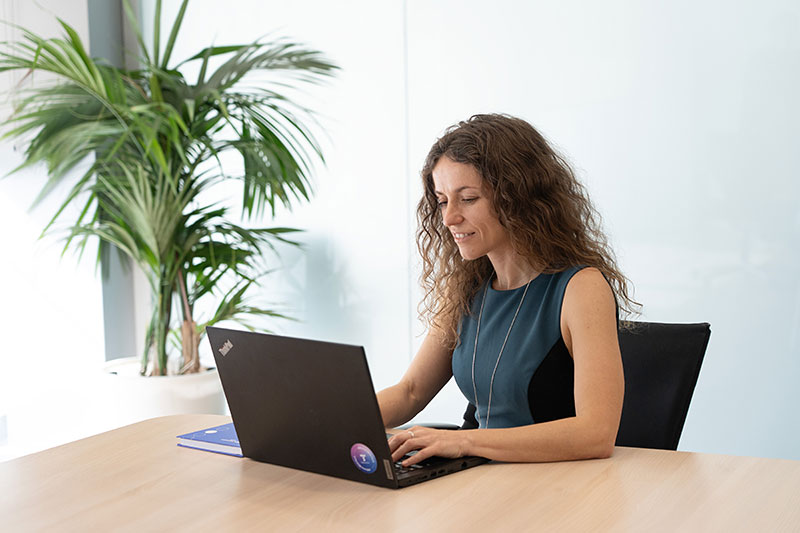
In the management of critical incidents, what makes the difference between a good team and an excellent one?
A strong critical incident management team stands out for clear communication, speed and the ability to coordinate multidisciplinary teams while remaining calm under pressure. A team that understands the impact on clients’ businesses and demonstrates both experience and methodology conveys reassurance, which is essential in situations that are extraordinarily complex. Investigation and response are just as important as supporting clients throughout the recovery process.
Mutual trust and a clear understanding of roles minimize errors and strengthen the response. Learning and adapting after each incident drives more efficient processes.
Mutual trust and a clear understanding of roles minimize errors and strengthen the response.
How do you think your experience can inspire more women to join the technology field?
I believe that having female profiles in this world helps new generations build role models and references. Vocations are awakened when those references exist and women can see real experiences. In my case, I had early access to hands on experience and, together with the support of educational programs, that was key to sparking my vocation.
Initiatives such as ‘Girls Inspire Tech’, part of our #WomenInTech program at Telefónica Tech, were created with that purpose: to inspire women, girls and young people to break stereotypes and discover the potential and appeal of STEM careers.
Through my role in #WomenInTech, I try to inspire anyone with a passion for this world to step into the field of technology.
 What does gender diversity bring to innovation and competitiveness in strategic sectors such as Cybersecurity?
Gender diversity drives creativity and innovation, and turns companies into more competitive and adaptable organizations in the face of technological change.
When women have a voice in technology, innovation wins, the company wins and society wins. Diversity is not a quota, it is a real advantage that turns innovation into a driver of economic and social progress.
In Cybersecurity, diversity enables the development of systems that are more ethical, secure and representative of the society we protect.
What advice would you give to girls and young women who want to pursue a career in this field?
When I am asked this kind of question, I always think about what I would say to little Ester, the one who did not quite know what she wanted to do in life. I would tell her not to worry about not having a plan. The message would be, do not be afraid and dare to go after whatever you want, you will achieve it in the end.
Girls should know that they can be engineers, scientists or Cybersecurity experts if that is what they want. That said, as with everything in life, commitment and dedication are essential.
We need to bring science and technology closer to girls from an early age to spark their curiosity.
What role do automation and Artificial Intelligence play in today’s SOCs and how far do you think they can go?
Automation and Artificial Intelligence are key to the evolution of today’s Security Operations Centers (SOC). Combined with human talent, these technologies make it possible to anticipate attacks, detect patterns and execute automated responses in a matter of seconds.
As a result, SOCs evolve from being reactive to becoming intelligent and adaptive, capable of anticipating and preventing threats efficiently. These technologies allow us to increase detection capabilities and minimize response times. Their use is not optional, it is essential. Without them, we would be unable to effectively manage today’s volumes.
The combination of automation, AI and human talent is key to the evolution of Security Operations Centers (SOC).