 Cloud & Business Apps
 Cybersecurity
 Data & AI
 IoT & Connectivity
 Industry
 Health
 Banking and Finance
 Public Sector
 Retail
 Tourism and Leisure
 Transport & Logistics
 Energy & Utilities
 Smart Cities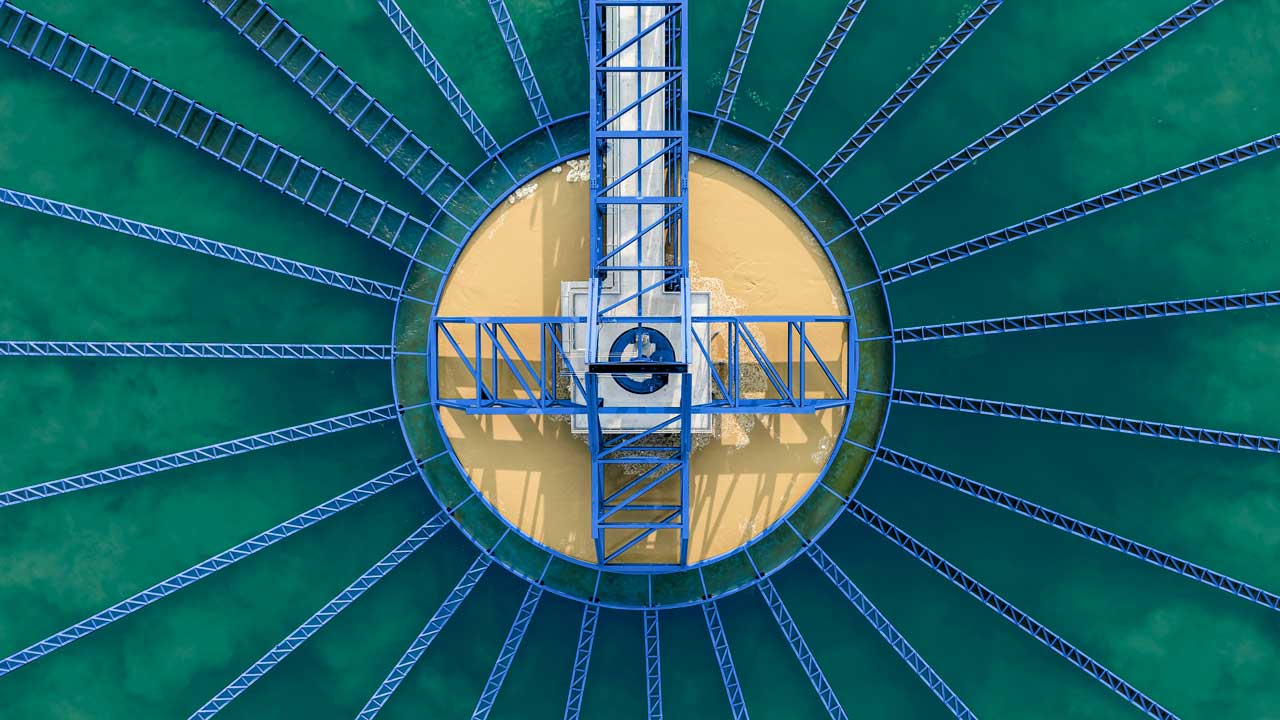

IoT Asset Control for more efficient asset management across the integrated water cycle
Digitalising water infrastructure assets: an increasingly important challenge
Water utilities are operating in an increasingly demanding environment. The need to ensure continuity of supply, optimise water resources and improve operational efficiency requires full visibility into the condition of their infrastructure.
Pumping stations, storage tanks, valves, flow meters, level sensors, chlorination equipment, remote monitoring stations and distribution networks are often spread across multiple locations and, in many cases, operate without continuous monitoring systems.
This lack of visibility makes it harder to detect issues early, increases maintenance costs, leads to unnecessary site visits and can affect service quality and continuity.
The good news is that the combination of IoT devices, smart connectivity and data analytics platforms can transform this infrastructure into connected assets capable of providing real-time information to optimise their management.
Connecting water infrastructure assets makes it possible to anticipate issues and protect service continuity.
The challenges of traditional water infrastructure management
Many water utilities still rely on on-site inspections, periodic checks or standalone systems to monitor their assets. As a result, many issues are not detected until they have already affected operations.
Some of the main challenges include:
- Lack of visibility into the condition of distributed assets.
- Late detection of faults in pumping stations, storage tanks or networks, leading to higher corrective maintenance costs.
- Unnecessary site visits for inspections and field checks.
- Risk of supply disruptions or reduced infrastructure performance.
- Difficulty optimising equipment performance and associated energy consumption.
■ In a context where efficiency, sustainability and service continuity are priorities, access to real-time information becomes essential for decision-making.
Reactive management limits the ability to anticipate issues and optimise resources.
Asset Control: remote monitoring and control of water infrastructure assets
Asset Control is our IoT solution designed to connect and monitor distributed assets using smart devices, IoT connectivity and a centralised management platform.
The solution makes it possible to capture operational data in real time and turn it into actionable insights to improve infrastructure performance across the integrated water cycle.
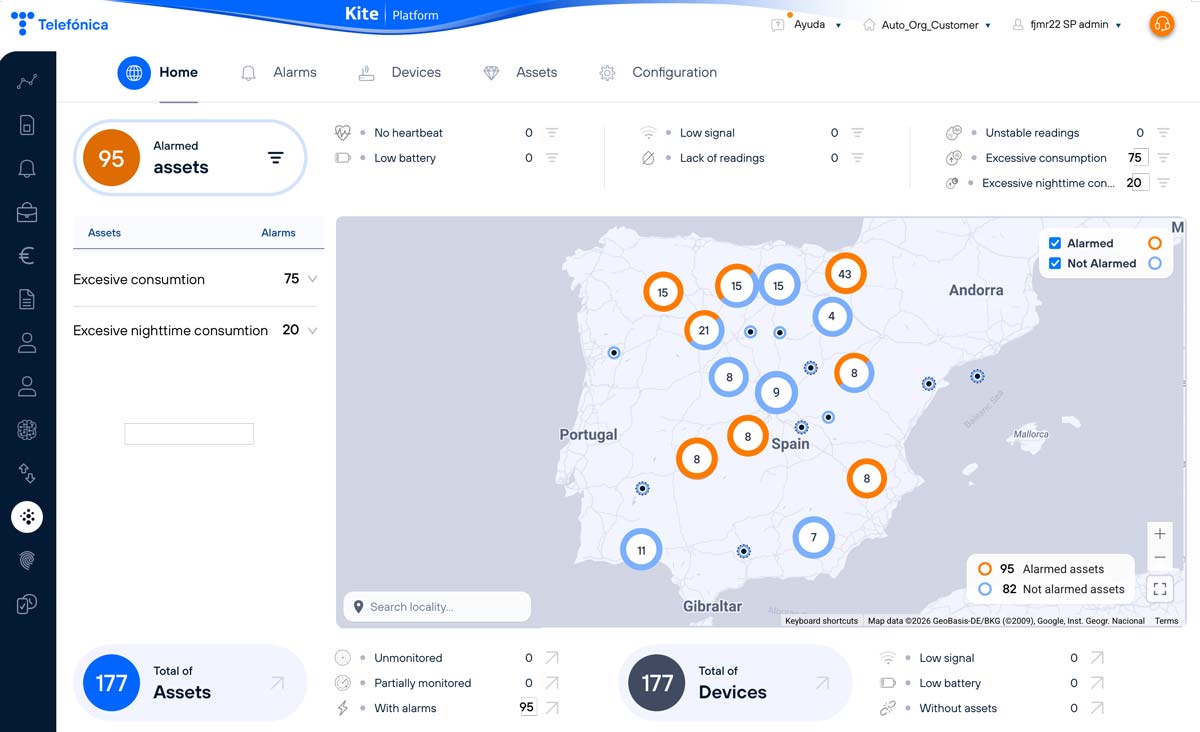 View of our Asset Control platform for remote monitoring and control of water infrastructure assets.
With Asset Control, water utilities can:
- Monitor variables such as flow, pressure, level, temperature, pump status and energy consumption.
- Detect anomalous behaviour that may indicate leaks, blockages or equipment failures.
- Configure automatic alerts when defined operating thresholds are exceeded.
- Monitor distributed facilities remotely without the need for frequent site visits.
- Analyse historical trends to optimise infrastructure performance.
- Locate assets using geolocation technologies.
- Integrate data with customer platforms or corporate systems via APIs.
Asset Control centralises the monitoring of distributed assets, turning data into operational decisions.
Real-world case: IoT monitoring of distributed water infrastructure
A water utility needed to improve the monitoring of distributed assets, reduce response times when issues occurred and optimise maintenance activities.
To achieve this, it deployed an IoT-based solution capable of monitoring variables such as level, pressure, flow and energy consumption in real time across pumping stations and storage tanks.
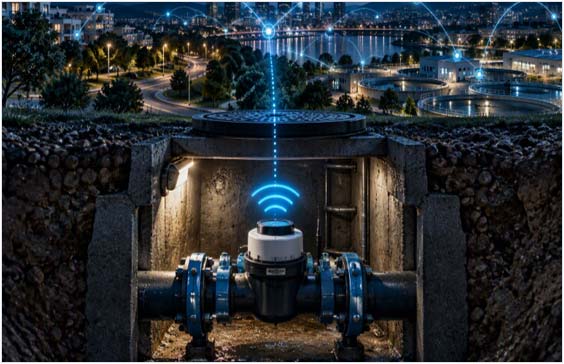 NB-IoT connectivity provides wide coverage and helps extend battery life in standalone devices.
The devices, connected using LTE-M and NB-IoT technologies, sent data to the Asset Control platform, where automatic alerts were generated when values deviated from predefined parameters.
Key improvements observed
- Early detection of anomalies at remote sites.
- Early identification of pressure loss and potential leaks.
- Continuous monitoring of pumps and critical equipment.
- Fewer site visits for routine inspections.
- Faster response to operational issues.
- Greater availability of water infrastructure.
IoT monitoring enabled earlier detection of anomalies, fewer site visits and faster response times.
Benefits of IoT monitoring in the water sector
Using IoT solutions for asset management delivers both operational and strategic benefits.
Lower operating costs
Remote monitoring and early detection of issues make it possible to optimise maintenance interventions and reduce unnecessary site visits.
Greater infrastructure availability
Continuous monitoring helps prevent equipment failures and contributes to more reliable operation of critical assets.
Data-driven decision-making
Access to historical and real-time information supports maintenance planning and continuous improvement of operations.
Greater efficiency and sustainability
Optimising the operation of pumps, storage tanks and networks can help reduce energy consumption, minimise water losses and improve the use of resources.
Scalability and integration
Asset Control's open architecture makes it easy to integrate data with existing systems and scale the solution as operational needs evolve.
Real-time visibility reduces costs, improves availability and supports more efficient and sustainable management.
Conclusion
The digitalisation of water infrastructure has become essential for improving efficiency, strengthening service continuity and moving towards more sustainable water management.
The same approach can be extended to organisations in other sectors that manage distributed assets. With Asset Control, they can transform traditional assets into smart, connected assets capable of providing real-time information, anticipating issues and optimising operations from a single platform.
■ The result is more efficient asset management, lower operating costs, improved service quality and a greater ability to operate effectively in an increasingly digital and connected environment. Find out more about Asset Control →
______