 Cloud & Business Apps
 Cybersecurity
 Data & AI
 IoT & Connectivity
 Industry
 Health
 Banking and Finance
 Public Sector
 Retail
 Tourism and Leisure
 Transport & Logistics
 Energy & Utilities
 Smart Cities

#WomenInTech: Marlyn Chávez on driving business with integrity
What do you do, and how has your career evolved from a legal background to specialising in Compliance at a technology company?
I currently lead the Compliance function at Telefónica Tech. I trained as a lawyer and spent much of my professional career working in the legal field. When I joined Telefónica in 2010, I discovered a sector that I became passionate about: telecommunications and technology. I have developed my career across different countries, which has given me the opportunity to experience different cultures, ways of working and business contexts, broadening both my professional and personal perspective.
Over time, I decided to take my career in a different direction and specialise in Compliance, a discipline that allowed me to combine my legal background with my interest in technology and business. What attracted me was the opportunity to help build trust, promote a culture of integrity and support the organisation in making responsible decisions aligned with its values. Today, I have the opportunity to do that at Telefónica Tech.
Combining legal, technology and business perspectives helps build trust and support responsible decision-making.
What is the main challenge for a Compliance professional in a technology company such as Telefónica Tech?
Keeping pace with technology and the business. In a company like this, the business is constantly changing, and Compliance needs to stay very close to the teams in order to understand those changes, anticipate risks and help ensure that new solutions are developed ethically, responsibly and in line with applicable regulations. What I enjoy most about my work is precisely that balance: promoting a culture of integrity without holding back business growth.
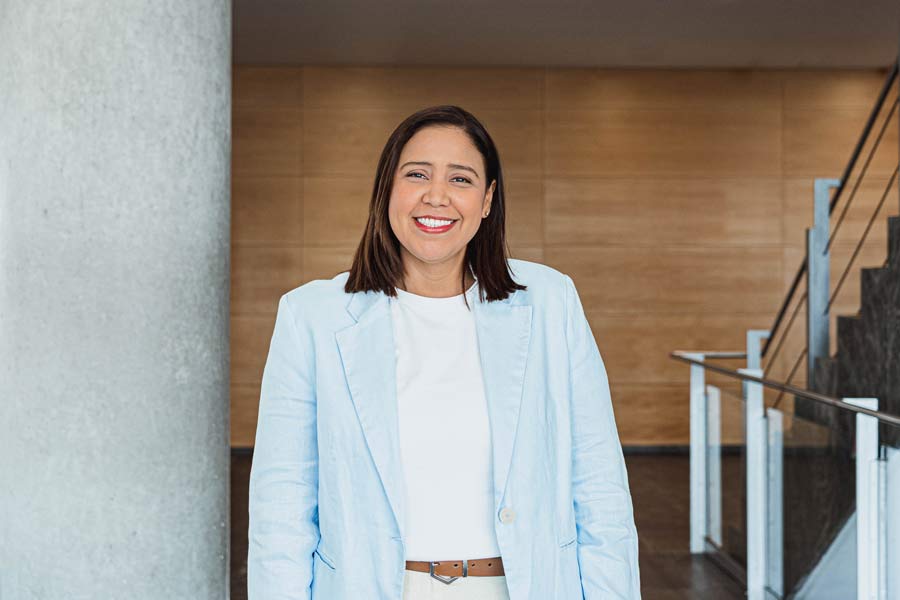
In that sense, the objective is not to say "no", but to help find the best way to do things, showing that integrity and technological development are not opposing concepts, but elements that need to move forward together to support strong business growth.
Keeping pace with technology makes it possible to drive the business with integrity.
We often associate Compliance with regulatory compliance, even though its scope is much broader. How would you explain the value this function brings to a technology company?
Although regulatory compliance is an important part of our role, the real value of Compliance lies in helping people and companies make decisions ethically, transparently and with integrity.
In a technology company, Compliance helps ensure that the business grows ethically and in line with our values. We support teams in their decision-making, help identify and manage risks, promote a culture of integrity and build the trust the company needs to achieve its business objectives.
When integrity becomes part of the way we work, it becomes a competitive advantage and a key element in building long-term trust.
Integrity makes Compliance a source of trust and competitive advantage.
How do you strike the right balance between driving new technologies and ensuring they are used responsibly and in line with regulations?
I believe the balance comes when Compliance is involved from the outset and works hand in hand with the business. Rather than analysing risks once an initiative has already been defined, our aim is to support teams from the earliest stages, helping to identify potential challenges and find solutions that allow services and technologies to be developed ethically, responsibly and in line with our principles, applicable regulations and the company's commitments to integrity.
The challenge is not to choose between business and compliance, but to understand that the two reinforce each other. Integrating this perspective into decision-making makes it possible to develop technologies that create value for customers and strengthen trust over the long term.
Involving Compliance from the outset makes it possible to innovate responsibly and build trust.
 How has your work changed in recent years with the arrival of new European regulations on AI, privacy and digital resilience?
Within our company, we have highly experienced specialists in our own function who lead on these matters and help the business adapt to the complexity of the regulatory environment.
From my area of responsibility at Telefónica Tech, I have seen how Compliance has evolved to become an increasingly close partner to the business. Today, it is essential to combine expertise in compliance, technology and risk management to help ensure that growth and technological transformation take place responsibly.
Regulatory complexity requires Compliance to work more closely with the business and stay closely connected to technology.
How do you get Compliance to stop being seen as an obligation and become part of a company's culture?
When people understand its purpose. If Compliance is seen simply as a set of rules, it is difficult for it to become part of an organisation's culture. But when people understand how it helps protect the company's reputation, manage risk and make better decisions, they begin to see it as something that adds value.
To achieve that, it is essential to stay close to the teams, listen to their needs, use clear language and show that Compliance is not there to create barriers, but to support the business. Culture is built by setting an example, by ensuring consistency between what we say and what we do, and through everyone's commitment, starting with leaders.
Understanding its purpose and recognising the value it brings makes compliance part of the company's culture.
If you could dispel one myth about Compliance, what would it be?
I would challenge the idea that we are some kind of "police force" within the company or that we are there simply to say "no". I think that perception still exists in some companies, but it is far removed from reality.
Compliance is not there to put up barriers or monitor people, but to help make sure things are done properly and responsibly.
Once it is understood in that way, it stops being seen as an obstacle and becomes an ally that helps companies grow and face their challenges with greater confidence.
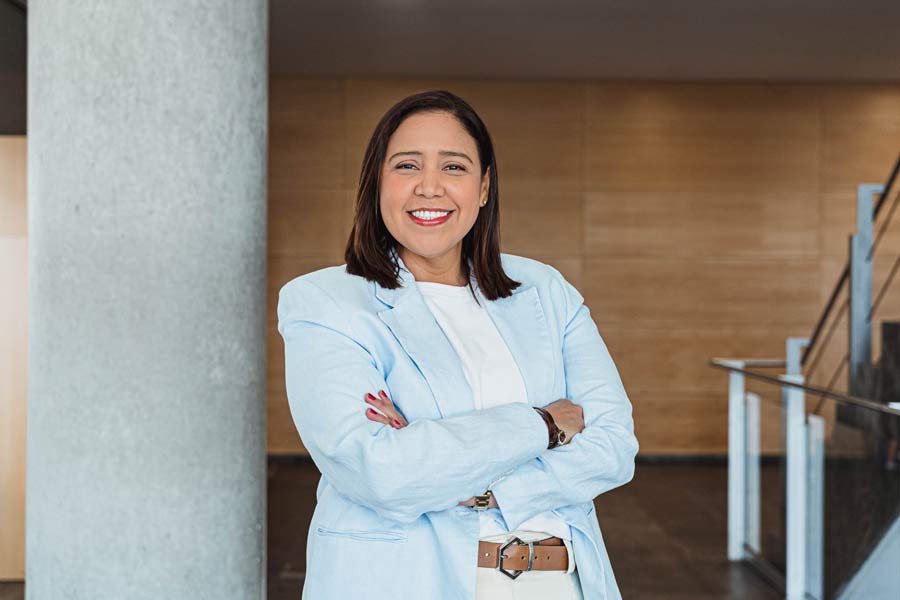
Far from holding the business back, Compliance helps people make better decisions and tackle challenges with confidence.
What would you say to young women who want to build a career in Compliance, and what do you think greater diversity of backgrounds can bring to the profession?
I would tell them to keep an open mind and take every opportunity to continue learning. Compliance is becoming an increasingly multidisciplinary profession, one that requires an understanding of business, technology, risk and, above all, people.
That is precisely why I believe greater diversity of backgrounds brings enormous value. The best decisions are made when different experiences, expertise and points of view come together. In today's global, technology-driven environment, we need professionals who can bring different perspectives to better understand the challenges organisations face.
I always encourage them to stay curious, remain open to learning and not be afraid to explore different paths, because sometimes the most interesting opportunities arise where we least expect them.
Diversity of backgrounds and experience enriches Compliance and leads to better decision-making.
______