 Cloud & Business Apps
 Cybersecurity
 Data & AI
 IoT & Connectivity
 Industry
 Health
 Banking and Finance
 Public Sector
 Retail
 Tourism and Leisure
 Transport & Logistics
 Energy & Utilities
 Smart Cities
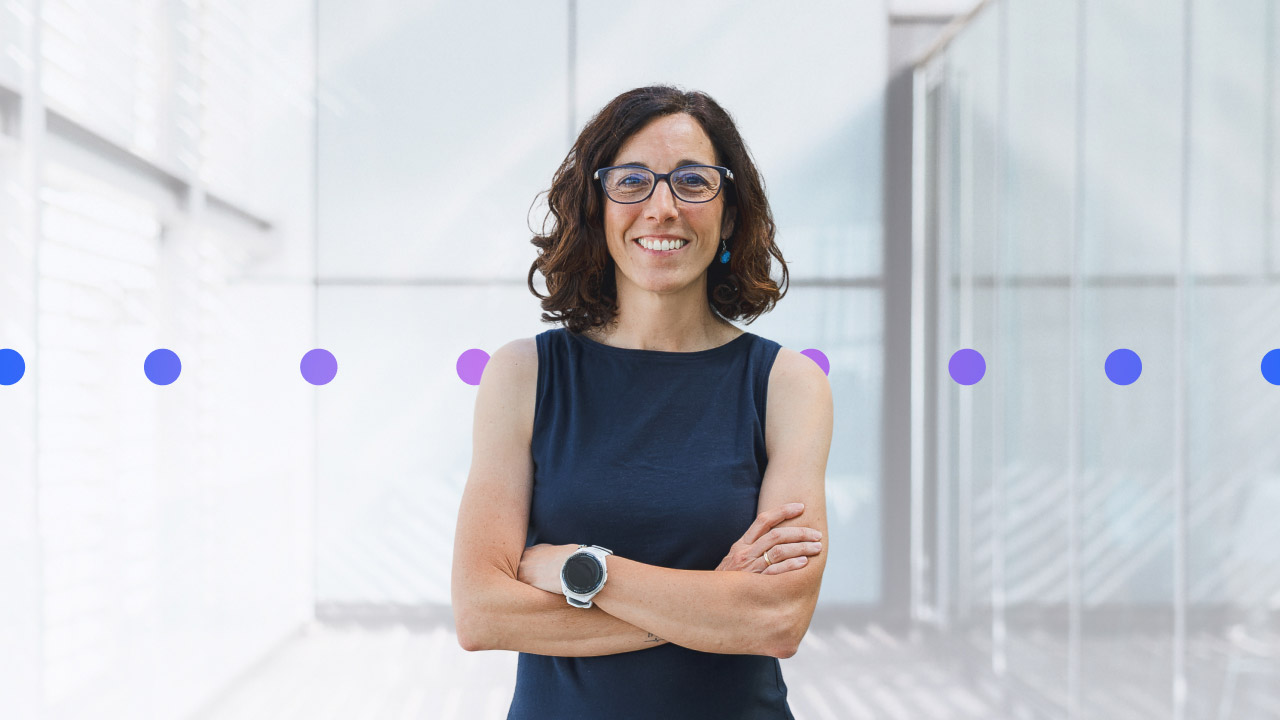

#WomenInTech: Esther Fernández on simplifying processes to transform ways of working
What do you do, and what path brought you here?
My career path has certainly not been a straight line. I am from Santander, I have lived in four countries and seven cities, and my career has taken me through very different areas before bringing me to Transformation and Processes.
I studied Business Administration and Management, but when I finished I felt I had chosen something too broad and wanted to specialise. Even then, I had a feeling that technology was going to transform the way business was done, so I decided to do a master's degree in e-business.
I started out in consulting and business development at Indra, first in Madrid and then in Barcelona. I later joined Orange in Switzerland, where I moved into finance, working as a financial controller and focusing on margin improvement.
The next big move was Brazil and Telefónica. I joined Vivo to work on a Smart Cities project that gave me the opportunity to travel across much of Latin America. After returning to Spain, I have worked in consulting, supported engineering teams by developing tools and solutions to simplify their work, and moved through Sales Operations, Margin Governance and, finally, my current role in Transformation and Processes.
Working across such different areas has taught me to connect different perspectives and work with teams to find simpler ways of working.
When we talk about transformation, we tend to think about technology, innovation or AI, but transforming processes is also fundamental. What does it really mean to transform a company from within?
For me, transforming from within starts with understanding. And to understand, you need to do a lot of listening. A process can be relatively easy to map out on paper if we only look at how a company should work in theory. The difficult part is getting into the detail and understanding how it really works: what each area does, why it does it, what it needs from the others and where the friction points are.
Then you have to question things. Just because something has been done in a certain way for five years does not mean it is wrong; at the time, it was probably the best solution. But companies evolve, and perhaps today we can do it in a simpler way.
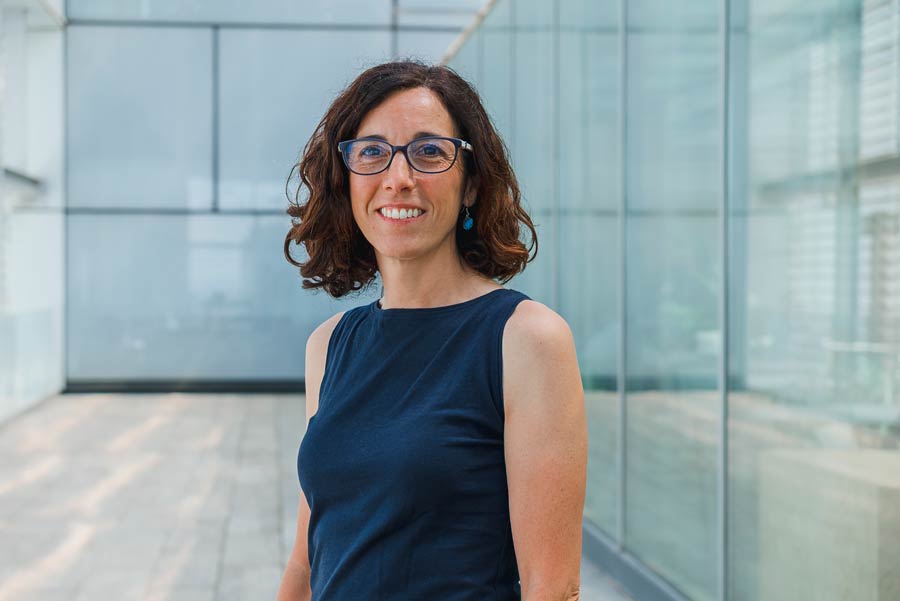
We are part of the company: we listen, bring a broader perspective across different areas and work with them to build solutions that work day to day.
Telefónica Tech is a large company, with multiple capabilities, teams and ways of working. What is the main challenge when transforming processes that have grown and evolved alongside the company itself?
Probably the biggest challenge is achieving a genuinely complete, end-to-end view. Our company has evolved enormously in just a few years. We have had to build up the company, integrate capabilities, develop tools and processes and, at the same time, meet very demanding business needs and serve our customers. It is only natural that each area has tried to find the best way to meet its own needs.
When you look at a process as a whole, you have to move beyond those individual areas and ask what makes sense for the company as a whole. And that work is almost as much about people as it is about processes.
Our role is to understand what each team needs and agree responsibilities with the different areas so that the end-to-end process works better.
How do you get people to change ways of working that have been established for a long time?
The first thing is not to assume that someone is resisting change simply because they do not want to change. You have to listen and understand what is behind it: workload, priorities, previous experiences or reasons that we may not be seeing from the outside.
Sometimes we even discover that two areas think they have a problem with each other when the cause is much simpler: a message that is not understood, information that is not getting through properly or different expectations.
Change does not happen by imposing a finished solution. You have to build it with the people who know the process and will be responsible for making it work.
And you also have to know when to ask for help. Accepting that we do not know everything and surrounding ourselves with people who know more than we do about certain things is not a weakness; it is an essential part of transformation.
 How far can technology help us simplify and automate processes, and when do we risk digitising complexity that we should have removed first?
I am a big believer in automation, but not for its own sake. We come from a company that has had to grow very quickly, where many processes started out with a lot of manual work. We now have a huge opportunity to automate them, but first there is a question to ask: does this process make sense as it is?
If we automate ten steps when we could really have four, we will have a more automated process, but not necessarily a better one.
I have had the opportunity to take part in developing tools, testing them and then training the users who had to work with them, and that has taught me something important: a tool only adds value if it genuinely makes the work easier for the person using it.
Before automating a process, you need to understand how it works and simplify it. Technology adds value when it makes people's work easier, not when it simply digitises the complexity that is already there.
Leading transformation means making decisions and challenging established ways of doing things. Which skills do you think are most important for driving this kind of change?
Over the years, my answer to that has changed quite a lot. At the beginning, I felt I had to be doing things, moving quickly and proving that I could deliver. Today, I value much more the ability to stop, analyse and, above all, listen before acting.
Transformation requires curiosity, learning and empathy: stepping outside our own area, understanding other people's priorities and working towards the company's shared goal.
You also have to lose the fear of not knowing everything and of getting things wrong. Asking for help, changing your initial idea after listening to someone who knows one part of the process better, or recognising that a proposal is not working as you expected does not make you less capable; it is part of learning.
For me, driving change is very much about that: listening, asking questions, learning, finding common ground and having the courage to challenge things, including your own ideas.
What distinguishes genuine process transformation from a simple change in ways of working?
Real transformation has to make something work better and, in addition, it has to be measurable. Documenting a process or changing a tool is not enough. You need to understand the end-to-end process, identify responsibilities, risks, controls and KPIs and, above all, make sure that the different areas involved in the same process share a common view.
Over the past few months, we have worked on very different initiatives: from automating processes such as rebate extensions or the offers committee, to reviewing purchasing requirements in after-sales and other end-to-end processes. In many cases, we are reducing manual work and automating follow-up, but we are also achieving something equally important: making information that used to sit within one area visible to the different areas that need it.
Transformation does not always require a major change. Sometimes it is enough to automate a task, make data visible, clarify responsibilities or help two areas understand each other better.
In my view, that is where real transformation lies: simplifying, connecting and making what happens from end to end visible so that we can work better as a company.
Looking back, from your first steps in your career to your current role, what advice do you wish you had been given then, and what advice would you give a woman starting her career in technology today?
I would tell the Esther who was just starting out to be in a little less of a hurry, and not to worry so much about knowing from the outset exactly what she wanted to do. Over the years, I have learnt that taking time to think, analyse, listen and put things into perspective is also work and, very often, it is where we actually add the most value.
To a woman starting her career in technology, I would say: be curious and, above all, be brave. Do not be afraid to take on challenges that you may not feel one hundred per cent ready for.
Experience matters, but so do attitude, the ability to learn and having someone trust you to take the next step. And perhaps that would be my main piece of advice: do not be afraid to change direction, make mistakes or not have all the answers. My career has not followed a path I could have drawn when I started out and, precisely because of that, it has taken me to places I would never have imagined.