 Cloud & Business Apps
 Cybersecurity
 Data & AI
 IoT & Connectivity
 Industry
 Health
 Banking and Finance
 Public Sector
 Retail
 Tourism and Leisure
 Transport & Logistics
 Energy & Utilities
 Smart Cities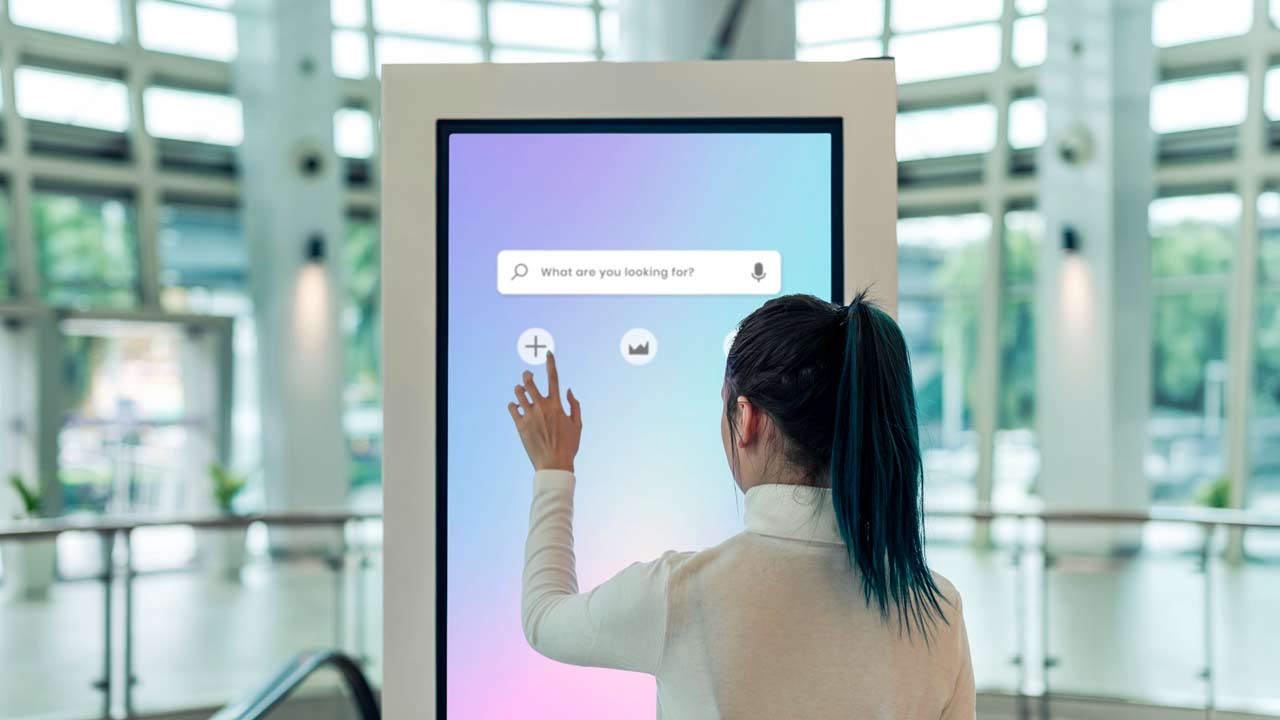

Retail media in-store: how dynamic marketing drives revenue at the point of sale
Retail media has become firmly established in recent years as one of the main growth channels in digital advertising, alongside search and social. For years, retailers have deployed dynamic marketing networks across their spaces, enabling them to own one of the most valuable assets in the digital ecosystem: deep customer insight and the ability to directly influence purchasing decisions through screens.
Brands are increasingly willing to invest in this space to reach consumers at the most relevant moment, when they are making a purchase decision.
For retailers, the key point is that more and more brands are allocating budget to environments where they can measure direct impact on sales. The store, both physical and digital, is one of those environments.
Retail media is redefining how retailers monetise their spaces by influencing purchase decisions at the point of sale.
This growth is not limited to the online space. The physical store has re-emerged as a strategic environment for advertisers, largely driven by the digitalisation of retail spaces and the widespread rollout of dynamic marketing networks.
In this context, retail media represents a strategic opportunity for retailers to transform their dynamic marketing into an advertising channel that is profitable, measurable and aligned with business objectives.
What is retail media?
Retail media encompasses all advertising solutions that a retailer offers to brands across its digital and physical properties: from website banners to sponsored ads in apps, newsletters, ecommerce placements, data clean rooms… and increasingly, in-store screens.
Unlike other advertising formats, retail media offers two key advantages:
Retailer first-party data
Retailers have direct access to customer behaviour: what they buy, how often, what they combine, how much they spend, how they browse in the app and how they interact in-store. This level of precision enables far more effective targeting than other digital media channels.
Impact at the point of purchase
Advertising moves beyond aspirational messaging and becomes transactional. In physical stores, this is even more evident: a screen placed on a shelf or in an aisle can directly influence shopper decisions in real time.
Retail media enables brands to reach consumers at the moment of purchase decision.
The physical store as an advertising asset
The real potential lies not only in market growth, but in the retailer’s ability to monetise existing assets.
Within the physical store, dynamic marketing becomes a key asset to engage customers, maximise revenue and deliver ROI from screen networks.
The physical store is becoming an asset capable of generating new revenue streams.
Over recent decades, retailers have heavily invested in screen networks, videowalls, kiosks, digital menu boards and interactive solutions. Originally designed to enhance customer experience, this infrastructure has now evolved into an asset capable of generating new revenue through retail media models.
The challenge lies in structuring this inventory to turn it into a recurring revenue stream.
How to structure and value in-store inventory
Retail media within dynamic marketing enables different monetisation models, but before exploring them, it is important to understand how inventory is categorised and measured.
Screens become premium media throughout the customer journey. Screen inventory should be categorised using attributes that allow brands to buy impressions, loops or campaigns, with segmentation based on:
- Location (aisles, shelves, entrances, checkouts)
- Store type or cluster
- Time or footfall
- Product category
This makes it possible to replicate online models in the physical environment.
Screens are becoming premium media within the customer journey.
As discussed in previous posts, dynamic marketing enables the creation of dynamic content that captures customer attention more effectively. Messages can be adapted by day, time, location or synchronised content. A wide range of possibilities. Integration with external data sources such as product inventory makes it possible to display only in-stock items or align with active promotions to increase relevance.
This level of flexibility significantly increases the value of advertising space.
From locations to audiences
Retailers have highly valuable data. By leveraging loyalty data, historical transactions, in-store sensors and zone traffic metrics, known as first-party data, retailers can offer audience-based advertising packages built on customer profiles and purchasing behaviour, rather than just locations.
The retailer can offer advertising based on real audiences and behaviour.
Measurement: a prerequisite for success
For retail media to be successful and viable it is essential to have metrics that demonstrate the real impact of campaigns. With current technology, it is now possible to measure:
- Exposure by location and footfall
- Sales uplift for advertised products
- Comparison with control stores
- Conversion to basket
- Dwell time in specific areas
Advertisers no longer invest based on probability: they seek real, measurable impact.
Advertisers seek measurable impact, not probability.
Business models
Retailers can choose between different business models depending on their maturity and strategy:
In-house inventory sales
The retailer directly manages the sale of advertising space to brands and suppliers.
- Advantages: full control, maximum margins.
- Disadvantages: requires a specialised sales structure.
Managed by a technology partner
A technology partner leads sales, planning and measurement.
- Advantages: faster monetisation, scalability.
- Disadvantages: shared margins.
Different models exist to monetise inventory depending on retailer maturity.
Programmatic inventory access
At more advanced stages, retailers can open part of their inventory to programmatic buying, expanding access to new advertisers and optimising occupancy.
- Advantages: incremental revenue without additional effort.
- Disadvantages: less control over the type of advertising.
Hybrid model
A combination of direct and programmatic sales with strategic brands. Today, this is the dominant model among mature retail media players.
Conclusion: dynamic marketing as a revenue catalyst
Retail media has evolved from a promise into a real business opportunity for retailers.
The physical store has once again become a strategic touchpoint. Screens no longer just enhance the customer experience, they now generate direct, measurable and recurring revenue.
At Telefónica Tech, through our proprietary platform The Brain and our end-to-end services, we enable the deployment of dynamic marketing networks with retail media, including in-store audio with advertising spots to deliver an omnichannel approach.
In-store screens generate direct, measurable and recurring revenue.
The platform enables centralised and segmented advertising management, along with access to all types of reporting, such as “proof of play” data and integration of internal and external data sources.
Our indoor insights solution provides anonymised behavioural data on customer activity within the physical space, enabling better business decision-making.
■ The message is clear: retailers that already have in-store screens have the opportunity to unlock a high-growth, high-margin revenue stream.
.jpg "Smart shelving does not only store products, but also knowledge and efficiency")
Image: Rawpixel / Freepik.