 Cloud & Business Apps
 Cybersecurity
 Data & AI
 IoT & Connectivity
 Industry
 Health
 Banking and Finance
 Public Sector
 Retail
 Tourism and Leisure
 Transport & Logistics
 Energy & Utilities
 Smart Cities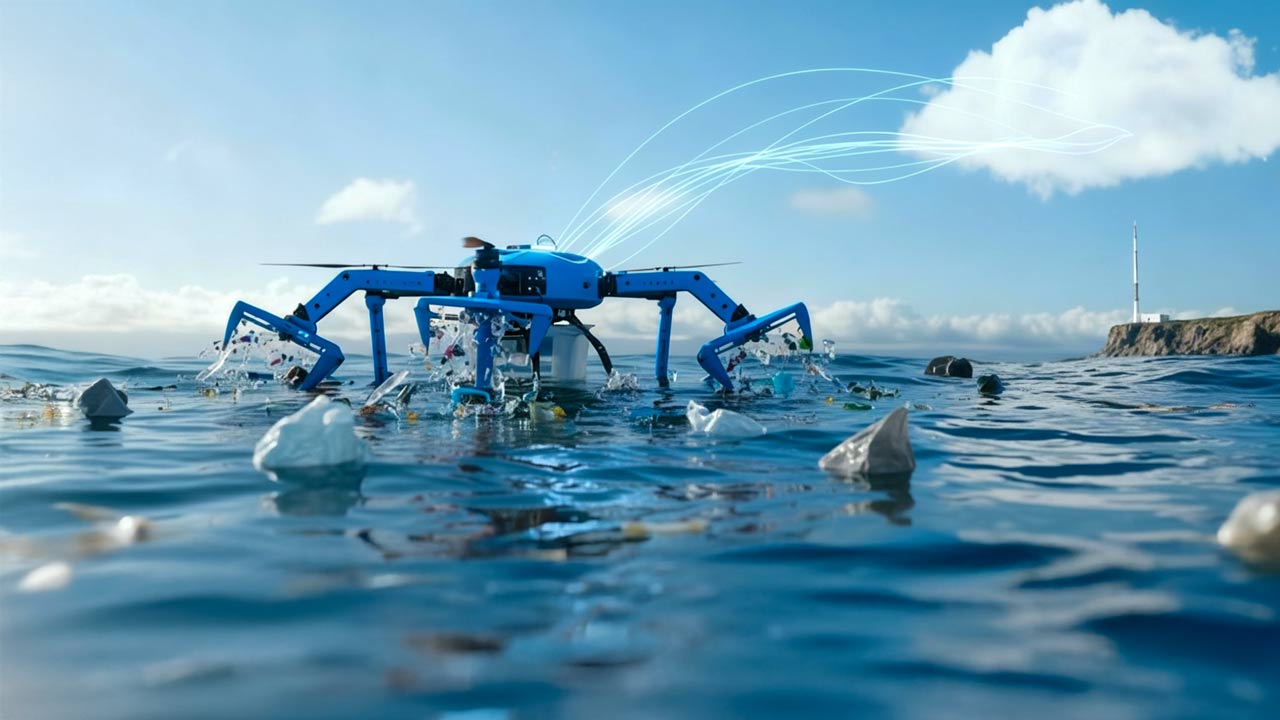

Aquatic drones: a new way to navigate toward blue sustainability
We are living in an era where innovation is moving full sail ahead, and technology is redefining the boundaries of what’s possible every single day. At the same time, the world is awakening to a new blue consciousness, where the sustainability of seas, rivers and lakes is no longer just an environmental concern, it's a genuine opportunity for global transformation.
Aquatic drones have changed the way we intervene, monitor and protect our water and marine resources. These robotic platforms are also reshaping a wide range of industries by offering smart, innovative solutions to increasingly demanding and complex challenges.
What is an aquatic drone?
An aquatic drone is an autonomous or semi-autonomous vehicle capable of navigating on the water’s surface or diving below it, operating without any human crew on board.
There are two main types: USVs (surface vehicles) and ROVs/AUVs (underwater vehicles, either remotely operated or fully autonomous). Their technical applications are multiplying:
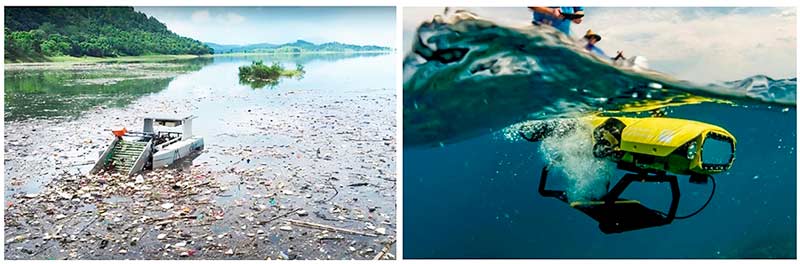 Surface aquatic drone (USV, left) and submersible aquatic drone (ROV/AUV)
- Infrastructure inspection and maintenance: from ports, dams, canals and ship hulls to sewage networks, submerged pipelines, offshore platforms and marine wind turbines, these drones provide critical data on corrosion, wear and structural integrity.
- Smart transport and logistics: prototypes already exist that can move light cargo between boats, islands or port facilities, following predefined routes and adapting to real-time environmental conditions.
- Surveillance, search, rescue and recovery: with high-resolution cameras, night vision and thermal sensors, they can monitor critical areas in real time, detect risks and track currents. They also support rescue efforts using lighting, acoustic signals and communication tools, complementing human teams during emergencies.
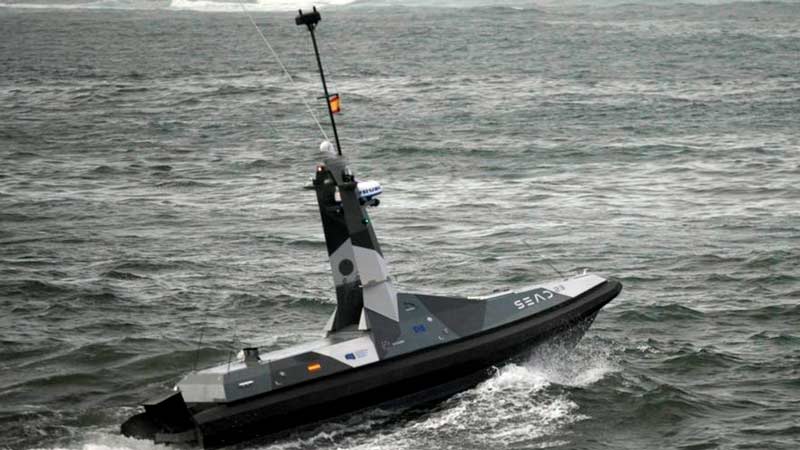 Drone used by the navy for surveillance operations. SeaDrone
- Environmental sampling and monitoring: equipped with advanced sensors, they can analyse water quality, microplastic levels, chemical and biological parameters, underwater habitats and wildlife migrations, paving the way for precision science and conservation projects.
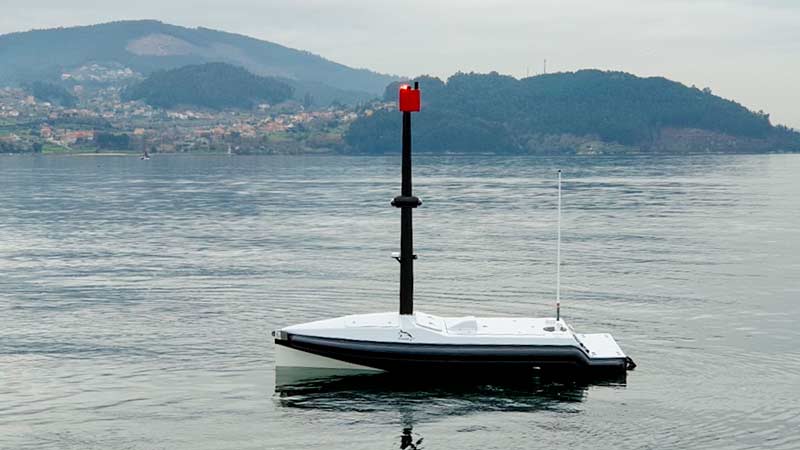 Aquatic drone used to locate tuna schools in open sea. SeaDrone
Aquatic drones are autonomous vehicles that monitor, inspect and protect aquatic environments with precision, safety and real-time data.
These machines integrate technologies such as:
- Submersible or high-buoyancy structures, built to withstand salinity, pressure and temperature.
- GPS, LiDAR, sonar and inertial measurement units (IMU) to provide reliable positioning, manoeuvrability and obstacle avoidance.
- Silent electric motors and high-autonomy batteries with eco-friendly propulsion systems.
- RGB, thermal and multispectral cameras, stabilised gimbals, wireless communications (radio, satellite or underwater acoustic) and IoT integration for real-time data transmission and management.
- IoT sensors that measure key water quality parameters such as pH, dissolved oxygen, temperature, turbidity, salinity and chemical or biological pollutants. These enable automated sampling in hard-to-reach areas, supporting detailed scientific studies and decision-making for sustainable ecosystem management.
In this context, at Telefónica Tech we position ourselves as a key player, contributing our expertise in 5G connectivity, IoT and Big Data to maximise the impact of aquatic drones.
Our value proposition lies in developing highly customisable, secure and scalable solutions: from continuous water quality monitoring to optimising intervention routes and smart infrastructure management, supporting research, industry, environmental protection and the sustainable development of coastal and inland communities.
Waste-collecting aquatic drones
Our vision takes shape through cutting-edge, concrete solutions that make a real difference in the fight against marine pollution.
At Telefónica Tech, we’re driving innovative projects such as 100% electric aquatic drones for plastic collection, combining advanced technology, IoT sensors and 5G connectivity to monitor and clean marine ecosystems efficiently and sustainably.
These initiatives reflect our commitment to a cleaner, healthier future, where technology becomes a catalyst for positive impact and real environmental transformation.
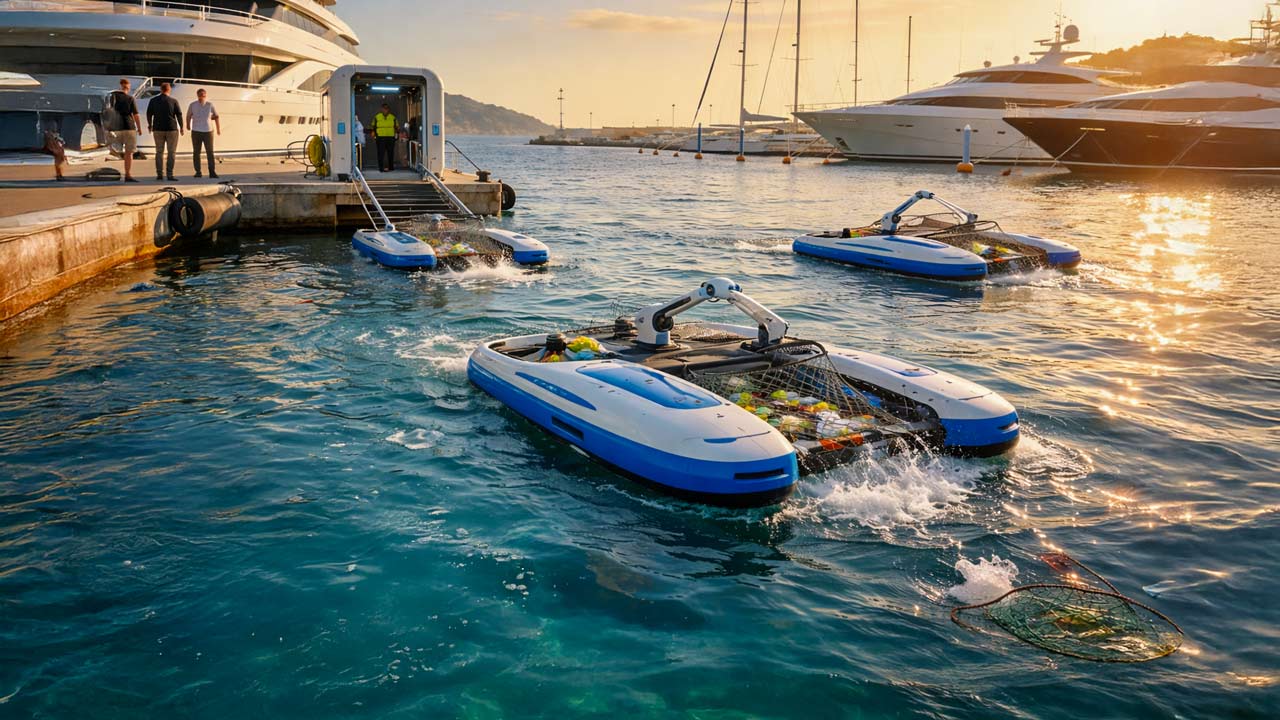
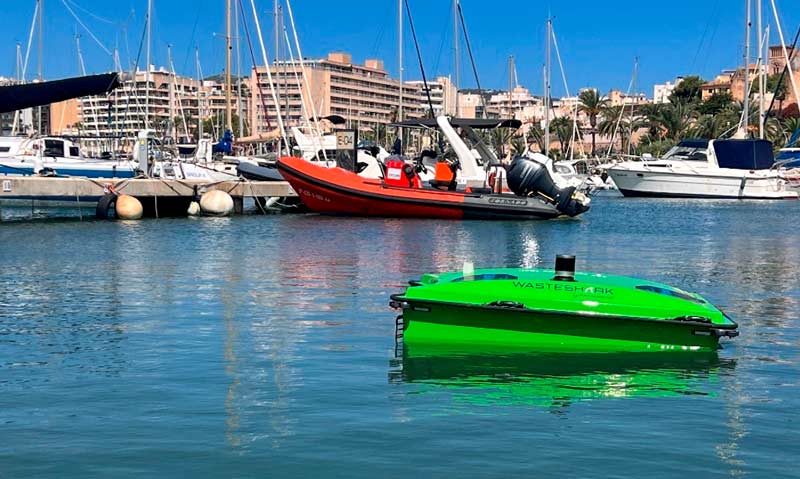 Aquatic drone for waste and plastic collection
This aquatic drone is a small autonomous surface vessel designed to operate in ports, urban waterways, rivers and lakes. Its waste collection system includes a removable basket with a 160-litre or 60-kg capacity, collecting up to 500 kg of waste per day, depending on the density of waste and environmental conditions.
Capable of collecting up to 500 kg of waste daily while monitoring water health in real time.
Operating principles and technological capabilities
Integrated sensors measure key water quality parameters such as temperature, oxygen levels, pH, turbidity, chlorophyll concentration and depth.
This data is transmitted in real time through our 5G connectivity from Telefónica Tech, enabling continuous, up-to-date monitoring of aquatic ecosystems.
Monitoring capabilities can also be expanded and customised based on the types of sensors installed on the drone. This allows the system to adapt to specific use cases and needs, whether it’s measuring particular contaminants, assessing habitat health or tracking specific environmental parameters in detail.
This level of flexibility and precision in data collection enables better-informed, real-time decision-making for water management and conservation, allowing for faster and more efficient responses to environmental risks or disruptions.
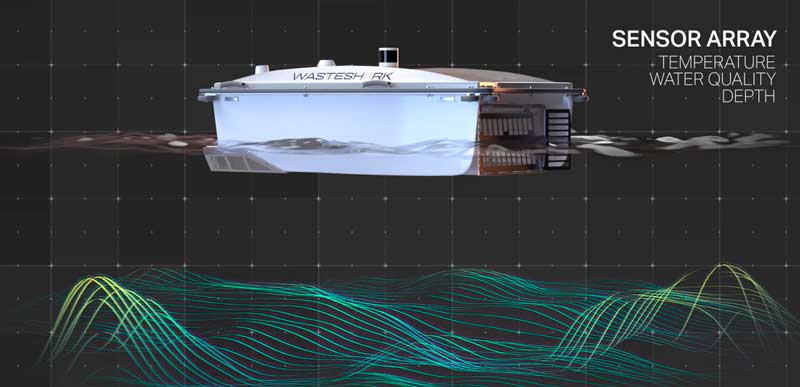 Temperature and depth sensors, among others. Ran Marine
Equipped with 5G, GPS and LiDAR, the drone can operate autonomously or remotely, with programmable routes and obstacle avoidance capabilities. It can reach a speed of 3 km/h, operate for up to 8 hours, and cover up to 24 km on a single charge.
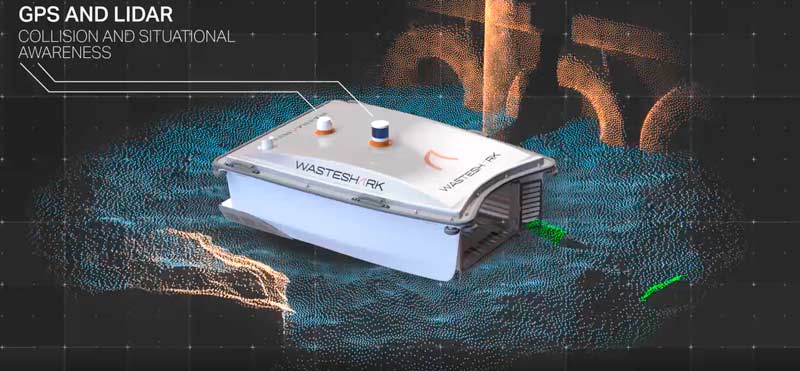 GPS and LiDAR systems for obstacle detection and avoidance. Ran Marine
Data flows efficiently from the drone to the cloud via our 5G connectivity, with visualisation through dashboards and FIWARE-ready APIs for seamless integration into existing platforms. This enables monitoring of environmental KPIs, route planning, drone status and service level agreement (SLA) compliance.
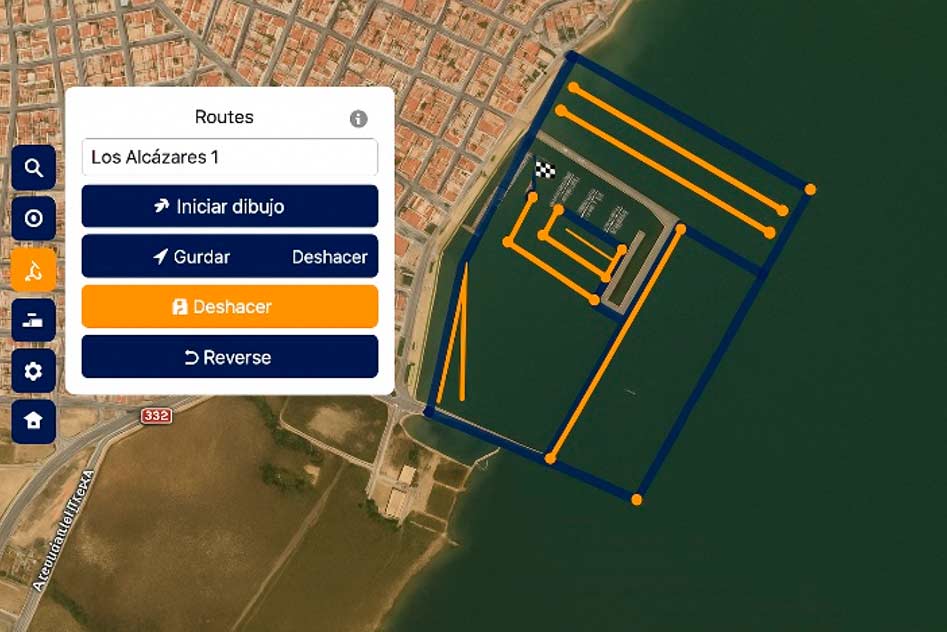 Example of aquatic drone route planning in Los Alcázares
Advantages of aquatic drones over traditional cleaning methods
This technology not only optimises costs and resources, it also delivers a faster, more consistent environmental impact, with the ability to adapt to various settings and specific cleaning needs. Aquatic drones therefore represent an evolution in sustainable and effective marine waste management compared to traditional cleaning methods, which rely heavily on manual labour and conventional boats with significant limitations in terms of reach, frequency and safety.
Conventional methods are often expensive, slow and highly dependent on weather and logistics, limiting their efficiency and continuity. In contrast, aquatic drones allow for continuous, autonomous and efficient operation, capable of covering large areas with precision and real-time response.
Aquatic drones eliminate the need for direct human exposure in polluted areas, significantly improving occupational safety.
Key benefits
- Direct impact: up to 500 kg of waste removed daily without disrupting port traffic.
- Data-driven decisions: 24/7 water quality monitoring to support discharge plans and ESG reporting.
- Safety and compliance: unmanned operation in hazardous areas, aligned with the EU Water Framework Directive.
- Cost efficiency: lower operational costs compared to traditional vessels and manual labour.
- Brand image: strengthened sustainability goals, attracting responsible tourism.
- Reduced ecological footprint: less plastic pollution and real-time environmental impact assessment.
Use cases
- Commercial and recreational ports
- Municipalities with rivers or urban canals
- Natural parks
- Industrial and energy sites
- Coastal resorts and private marinas
- Aquaculture areas
IoT and 5G connectivity for efficient data transmission in aquatic drones
Aquatic drones designed for waste collection are a high-value tool for improving water quality and restoring marine ecosystems. But their true potential is unlocked when they are equipped with advanced cellular connectivity, especially 5G.
With this technology, aquatic drones can transmit in real time all data gathered by their sensors such as pH, temperature, oxygen levels, turbidity and pollutant presence directly to Cloud platforms for continuous analysis, monitoring and traceability.
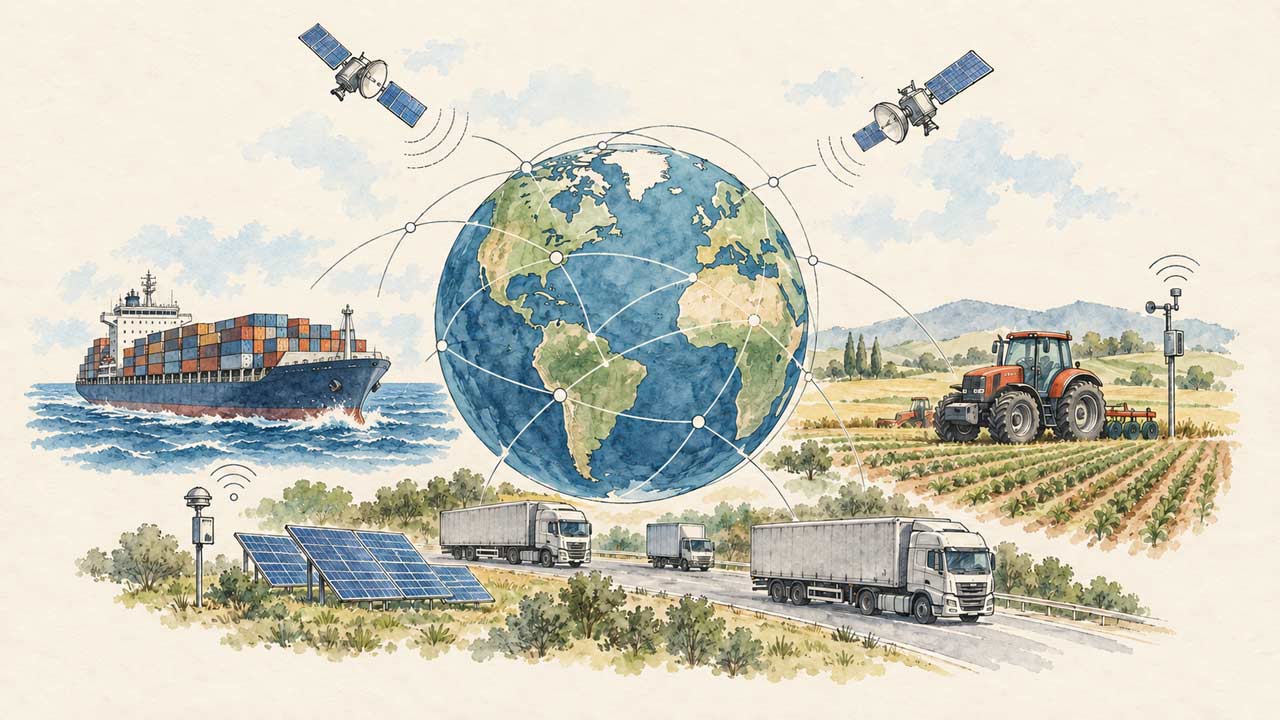
5G connectivity turns aquatic drones into intelligent platforms capable of operating, transmitting data and making decisions in real time.
5G not only enables efficient transmission of large volumes of data, it also makes it possible to automate deployments and plan smart routes from centralised platforms. No more dependence on limited radio remote control: now systems can load predefined routes, adjust parameters in real time and carry out remotely controlled missions, even from distant locations, boosting flexibility and reducing direct human involvement in complex or hazardous environments.
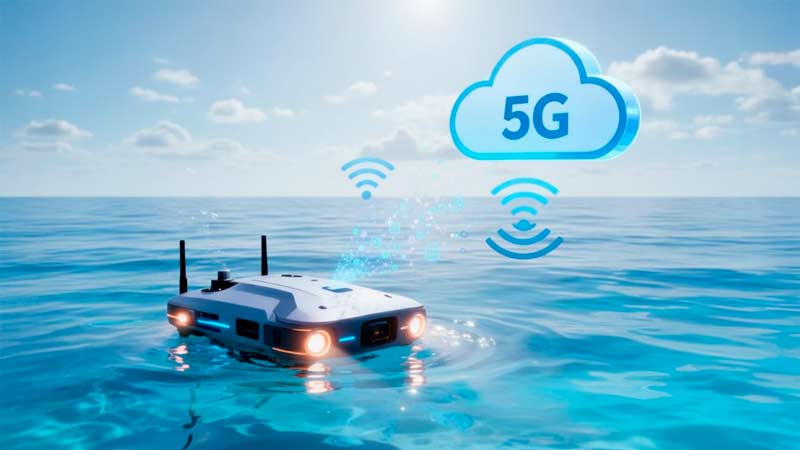 5G connectivity enhances aquatic drone capabilities
In addition, 5G enables strategic remote control of these drones from any location, allowing expert remote support and collaborative deployment of multiple units for coordinated operations.
By adding computer vision and AI capabilities, all collected data, visual, environmental and operational, is fed into centralised databases to enable advanced analytics, automated responses and informed decision-making based on real-time Big Data insights.
Our value proposition: reliability, secure connectivity and customisation
At Telefónica Tech, we provide maximum reliability and security in critical connectivity with low latency, ensuring data protection and confidentiality from the drone to the customer’s cloud.
Our technology and expertise allow us to analyse each use case and design the best-fit architecture for robust data transmission —no dropouts, no data loss, and fully protected against external threats.
This combination of IoT, 5G, AI and Cloud technologies boosts the efficiency of environmental management and opens the door to circular economy models and marine sustainability, setting new standards and opportunities in digitalisation.
At Telefónica Tech, we provide secure connectivity, low latency and tailored solutions to maximise positive environmental impact.
■ MORE OF THIS SERIES