 Cloud & Business Apps
 Cybersecurity
 Data & AI
 IoT & Connectivity
 Industry
 Health
 Banking and Finance
 Public Sector
 Retail
 Tourism and Leisure
 Transport & Logistics
 Energy & Utilities
 Smart Cities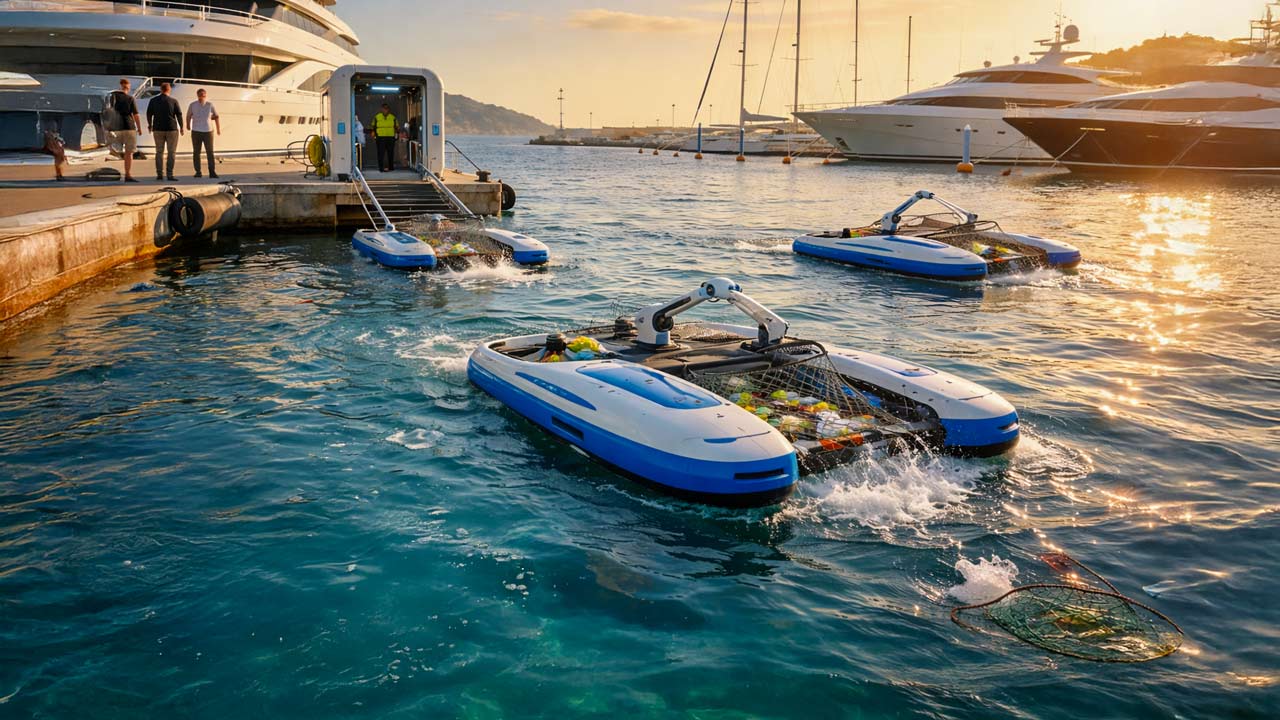

Aquatic drones in action, use cases that showcase the value of this innovative IoT and 5G technology
In the first post of this series on aquatic drones, we saw that they are much more than simple floating gadgets and that they have already become established as key IoT solutions for blue sustainability, capable of cleaning, monitoring and protecting seas, rivers and ports autonomously and in a connected way.
In this second part, we move from theory into the water to explore use cases, projects that are already making a difference in this field and scenarios where computer vision capabilities become an essential ally to deliver greater value, precision and decision making capacity in every operation.
Use cases for environmental maintenance and cleaning
The deployment of aquatic drones has transformed environmental management in port, river, coastal and industrial environments, bringing efficiency, autonomy and real time data collection. Thanks to their versatility and ability to operate continuously, these devices make it possible to address a wide range of challenges, optimising resources and ensuring the sustainability of aquatic ecosystems.
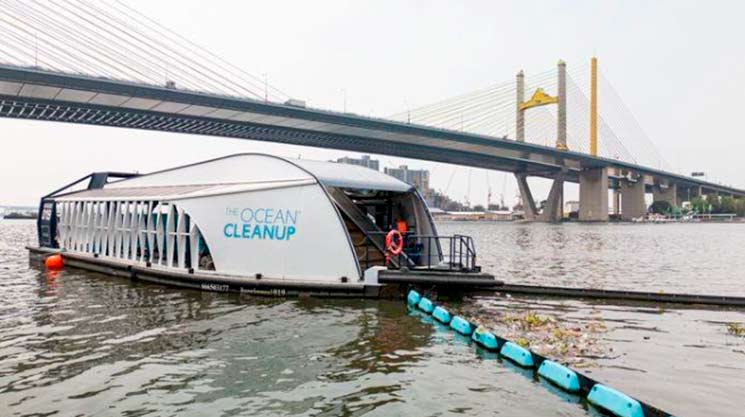 Waste collection in rivers – The Ocean Cleanup
Aquatic drones are already transforming environmental management through efficiency, autonomy and real time data.
Waste cleaning in maritime ports
Ports act as critical accumulation points for waste due to sea currents, port activity and urban influences. Equipment such as autonomous aquatic drones can continuously collect plastics, oils or surface biomass.
These drones are equipped with sensors and cameras that enable them to identify waste, optimise routes and ensure they return to base for emptying, thereby improving water quality and the image of the port environment without interrupting commercial activity.
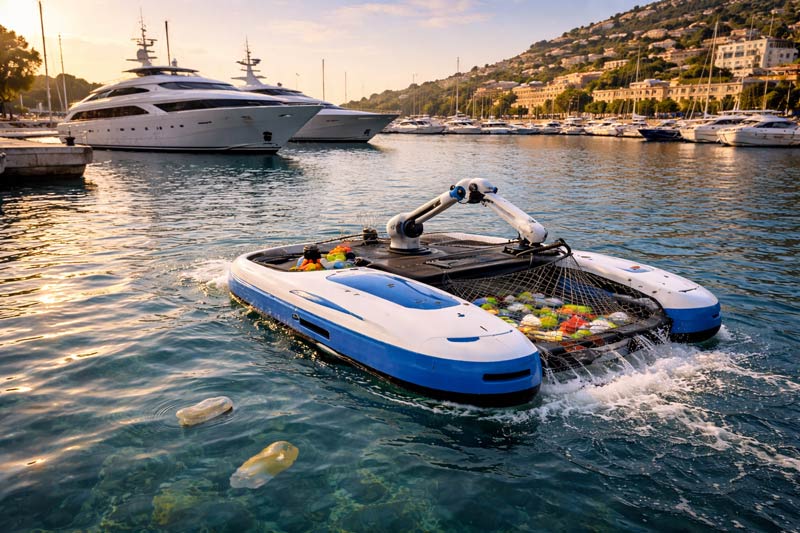 Representation. Waste cleaning with a drone in a marina
Removal of blue green algae (cyanobacteria)
In lakes, reservoirs or coves, excessive proliferation of cyanobacteria threatens biodiversity and bathing safety. Aquatic drones can map outbreak areas of these algae, extract them from the surface and monitor parameters such as dissolved oxygen, pH or temperature, enabling selective and efficient removal processes.
Their action helps to restore water quality and improve ecosystem health in recreational or natural environments.
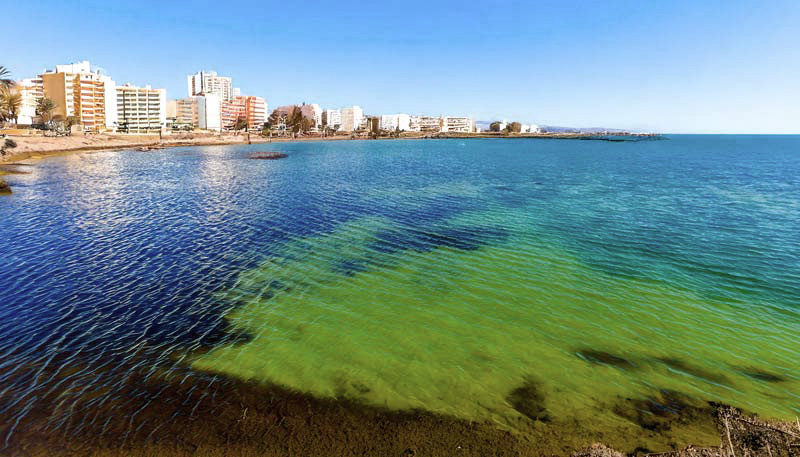 Representation of blue green algae
Cleaning waste and plastics in rivers and lakes
Rivers are the main entry route for pollutants and plastics into the sea. These drones can move autonomously along particularly vulnerable river stretches, collecting both floating debris and microplastics during cycles of up to eight hours.
This early intervention prevents the subsequent transport of waste to the ocean, protects river biodiversity and helps reduce the formation of microplastics in seas and on beaches. The solution is also applicable to lakes, supporting and benefiting their cleaning and conservation.
Pollution prevention in bathing and recreational areas
Beaches and coves require optimal hygienic conditions. Aquatic drones operate in the daily removal of organic matter, plastics and pollutants generated by bathers or weather changes, monitoring water quality evolution in real time.
Their reports help tourism and health managers make rapid decisions after storms or periods of high occupancy, ensuring public health and the tourist image of the area.
Environmental maintenance in industrial port areas
The industrial environment of ports and shipyards involves the presence of oils, micro pollutants and floating waste. Drones can access confined spaces, carry out periodic cleaning without interrupting productive activity, record environmental data and document regulatory compliance.
Their use reduces the costs associated with conventional cleaning and decreases the cumulative environmental impact of industrial activities.
Monitoring and cleaning in aquaculture areas
In fish farms and marine cultivation facilities, aquatic and submersible drones play a key role in ensuring the health and sustainability of production. They remove organic waste, leftover feed and plastics accumulated in cages or floating platforms, preventing the emergence of pathogens and improving water quality. In addition, thanks to their sensors, they monitor essential parameters such as dissolved oxygen, pH, temperature, salinity and turbidity, providing continuous data that allows feeding adjustments and the prevention of disease risks or mass mortality events.
The use of drones in aquaculture ensures clean facilities, healthy species and reduced ecological impact, while also facilitating decision making based on objective, real time information.
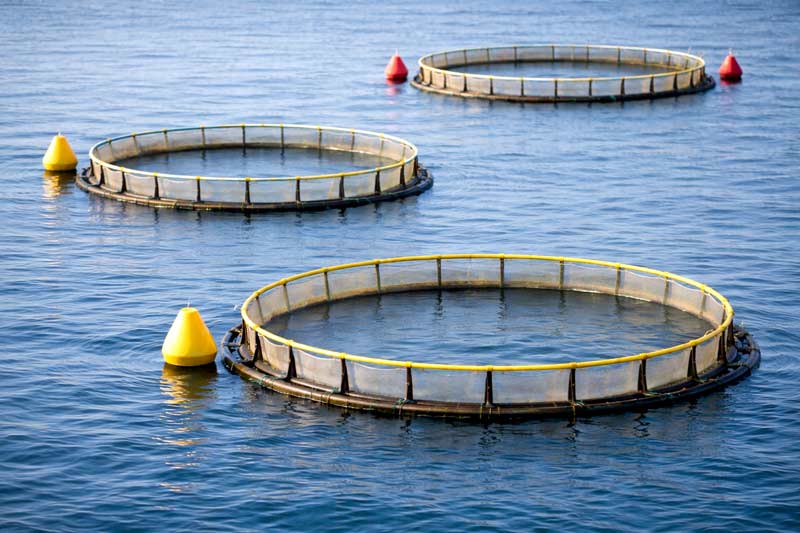 Aquaculture facilities
New scenarios for blue sustainability
Exploring these use cases not only broadens our perspective on the scope of this technology, but also sparks the imagination about everything that is yet to come. With these examples alone, it is already possible to envision new scenarios and sectors where aquatic drones can deliver value and make a difference in environmental matters, from protecting natural reserves to preventive management in critical infrastructures or rapid intervention in ecological emergencies.
At Telefónica Tech, we are fully aware of this potential and, for that reason, we will continue working actively to be part of this evolution. We are committed to collaboration and constant innovation, convinced that technology, combined with a sustainable vision, will be the key to addressing future challenges and building, together with our partners and clients, cleaner, more resilient aquatic ecosystems prepared for the next generations.
Computer Vision: key to the evolution of aquatic drones
Computer vision technology is fundamental in aquatic drones for waste collection, enabling plastics, organic matter and metals to be detected and classified using AI in real time. This technology enhances precision and automates navigation towards waste, optimising operations and environmental impact.
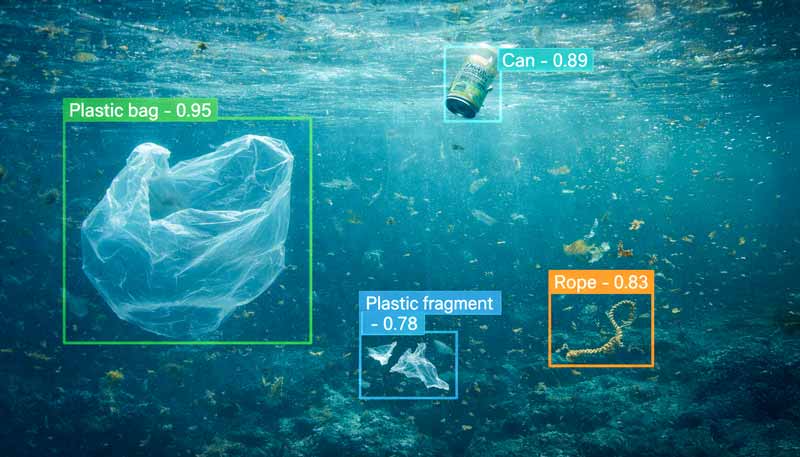 Computer vision for waste detection and classification
With 5G, the collected data is sent to Cloud platforms for analysis, helping to plan routes, design recycling strategies and adopt specific measures according to the type of waste. This data driven approach facilitates circular economy models by identifying recovered materials and potential future uses, promoting sustainable waste management.
The combination of computer vision, AI, Big Data and IoT connectivity turns these drones into intelligent tools that enhance cleaning operations and contribute to the sustainability of aquatic ecosystems.
Intelligent waste collection drives the modernisation and digitalisation of environmental strategies.
Aquatic drones are emerging as a tool that drives sustainability
At this point, the enormous potential of using aquatic drones to collect plastics and other floating waste is evident, helping not only with cleaning but also with the modernisation and digitalisation of environmental strategies.
Below, we highlight several of the most innovative and representative projects of the past year, each exemplifying different technological approaches, social impact and sustainable focus.
Inspiring projects: blue innovation
Blue innovation is already a reality in European ports and ecosystems.
SeaClear2.0: TU Delft and European partners
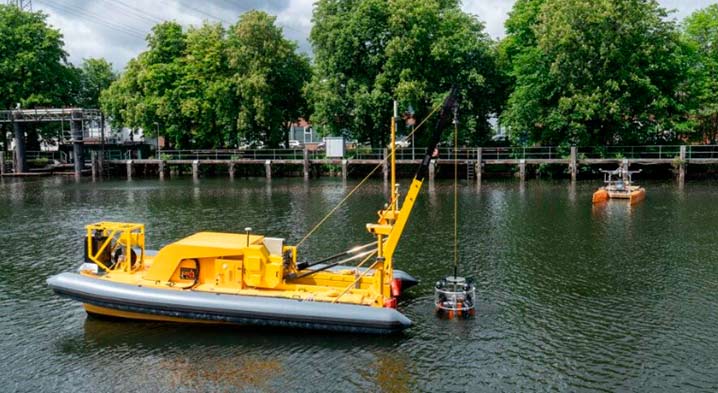 Port of Hamburg. Aquatic drone from Delft University of Technology
The Delft University of Technology (Netherlands), together with institutions from nine countries, has successfully demonstrated the SeaClear2.0 system in the Port of Hamburg. This European initiative integrates surface drones, autonomous vessels and underwater robots that, thanks to artificial intelligence and image recognition, can detect, classify and remove waste both on the surface and on the seabed.
They have managed to operate jointly at depths of up to 100 metres, removing objects weighing up to 250 kg, and contribute to the European mission to restore oceans and waters by 2030.
University of Cádiz: unmanned marine vehicles for environmental monitoring
The Higher Andalusian Centre for Marine Studies (University of Cádiz) operates marine drones that carry out environmental monitoring, sampling and autonomous cleaning tasks in marine and port environments. Their activities include pollution measurements, cleaning operations after disasters and coordinated waste removal with other scientific robots, offering a Spanish example of innovation applied to marine sustainability.
Clean Sea Solutions, Norway
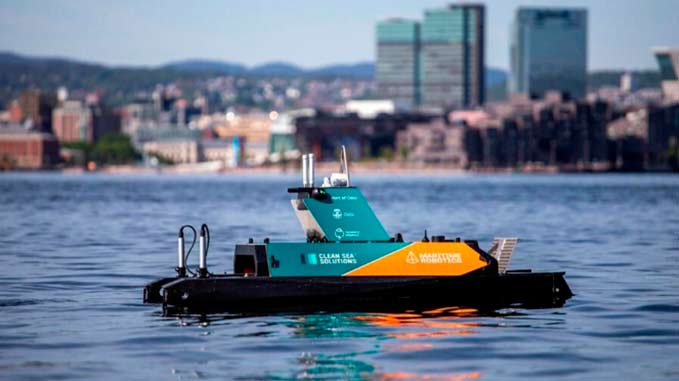 Clean Sea Solutions. Aquatic waste collection drone
The Cleaning Drone V1 by Clean Sea Solutions has been operating mainly in Norway, with notable actions in the Port of Oslo since 2021. In 2025, it continues to be used in Norwegian ports and marinas, and the company is expanding its technology into Mediterranean countries and other European markets.
Its objective is to achieve clean water areas near the coast and transform waste management in port spaces.
SeaClear, France
The European SeaClear project, led by the Technical University of Munich (TUM), has developed a spider shaped underwater robot to tackle the accumulation of marine litter, one of the greatest environmental challenges. The solution was deployed in the Port of Marseille and managed to operate at depths of more than 16 metres with precision and safety.
The objective is to replace hazardous tasks for divers, optimise marine cleaning and prevent waste from reaching beaches.
Towards a bluer and more sustainable future
Each of these projects reflects how the combination of technology, vision and commitment can transform traditional environmental solutions into intelligent, sustainable and low impact strategies, benefiting both the environment and society.
Technology and collaboration are key to building cleaner and more resilient aquatic ecosystems.
Our challenge at Telefónica Tech is to accompany this great wave of blue innovation with IoT solutions and 5G connectivity that enhance each of these developments. Digitalisation, artificial intelligence and a circular approach make it possible to maximise the value of every piece of data, every route and every item of waste collected, ensuring that we not only clean the sea, but also create opportunities to reuse, recycle and give a second life to plastics and marine waste.
The future is blue, and technology will be the driving force to achieve clean, sustainable and vibrant seas.